- Home
-
-

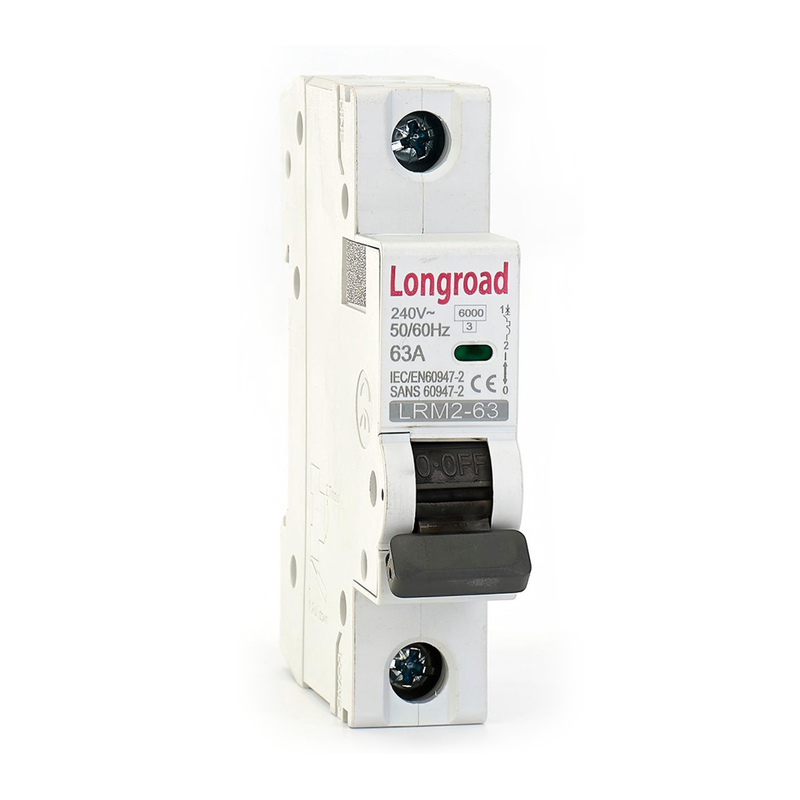
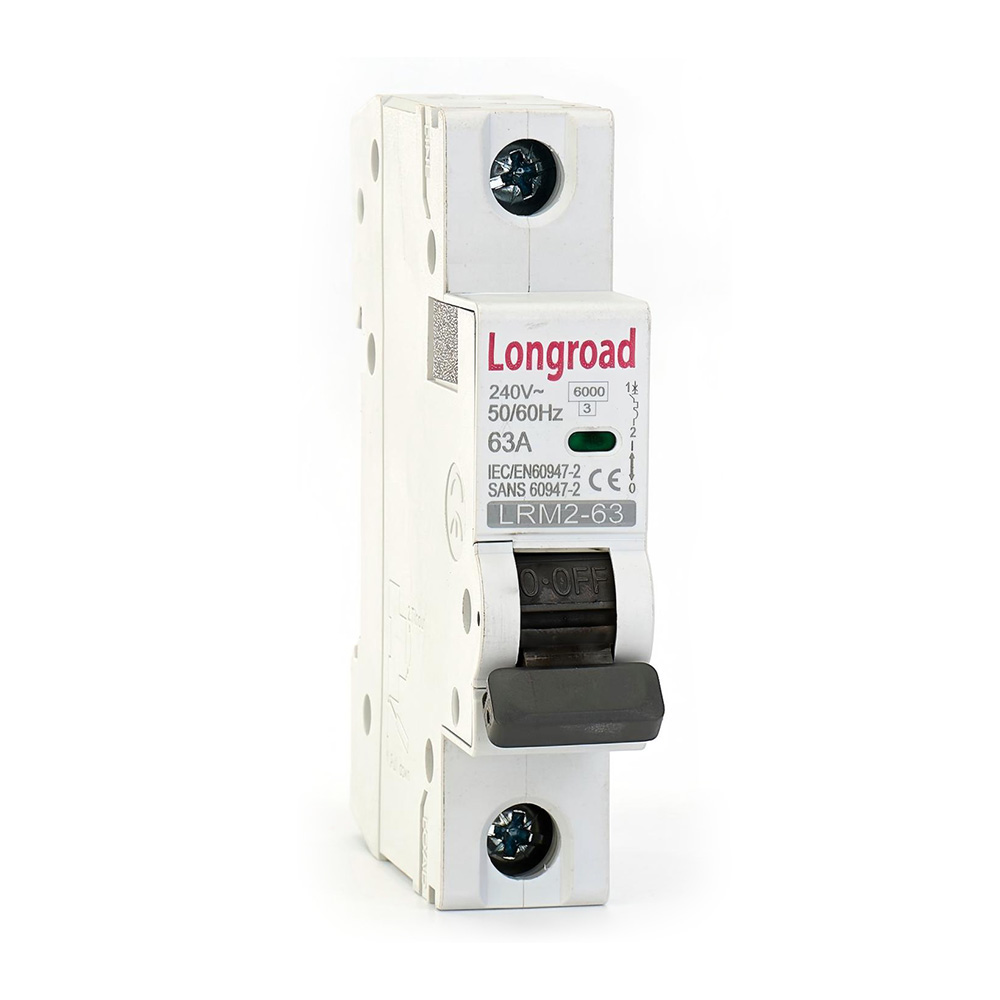
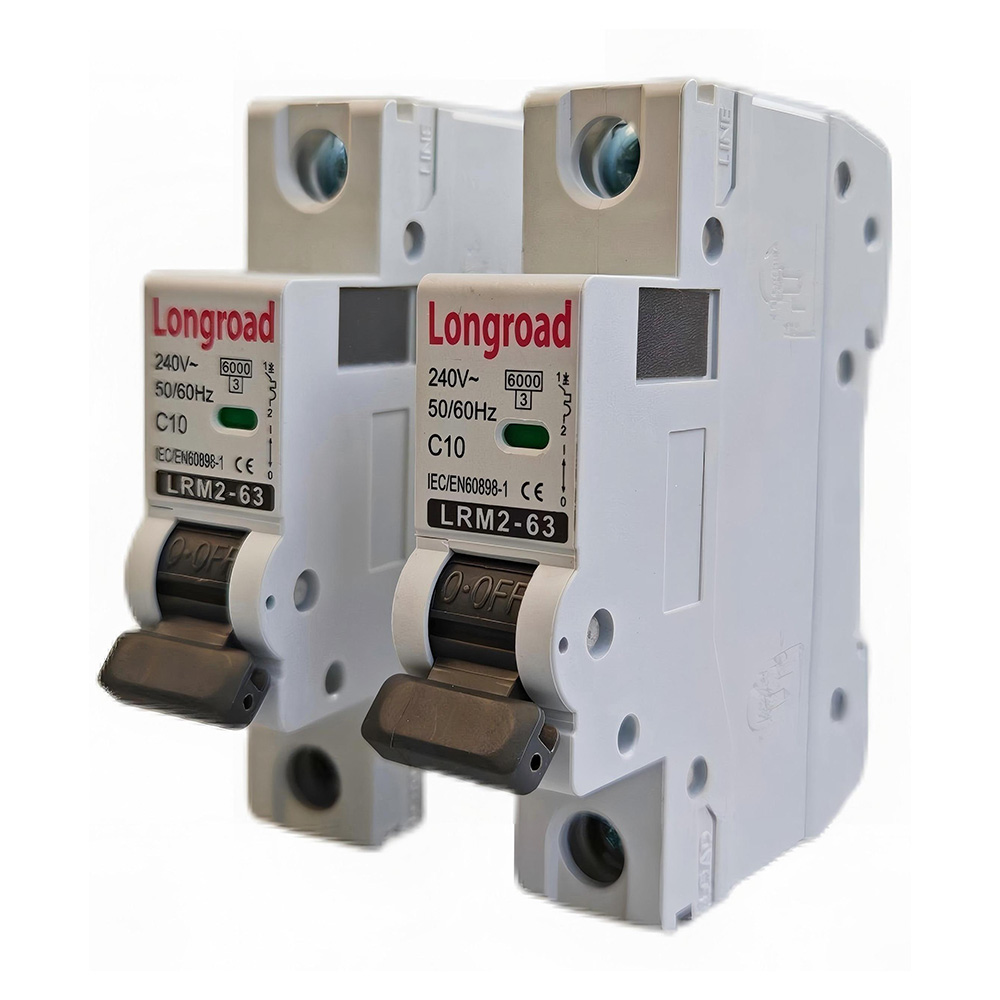
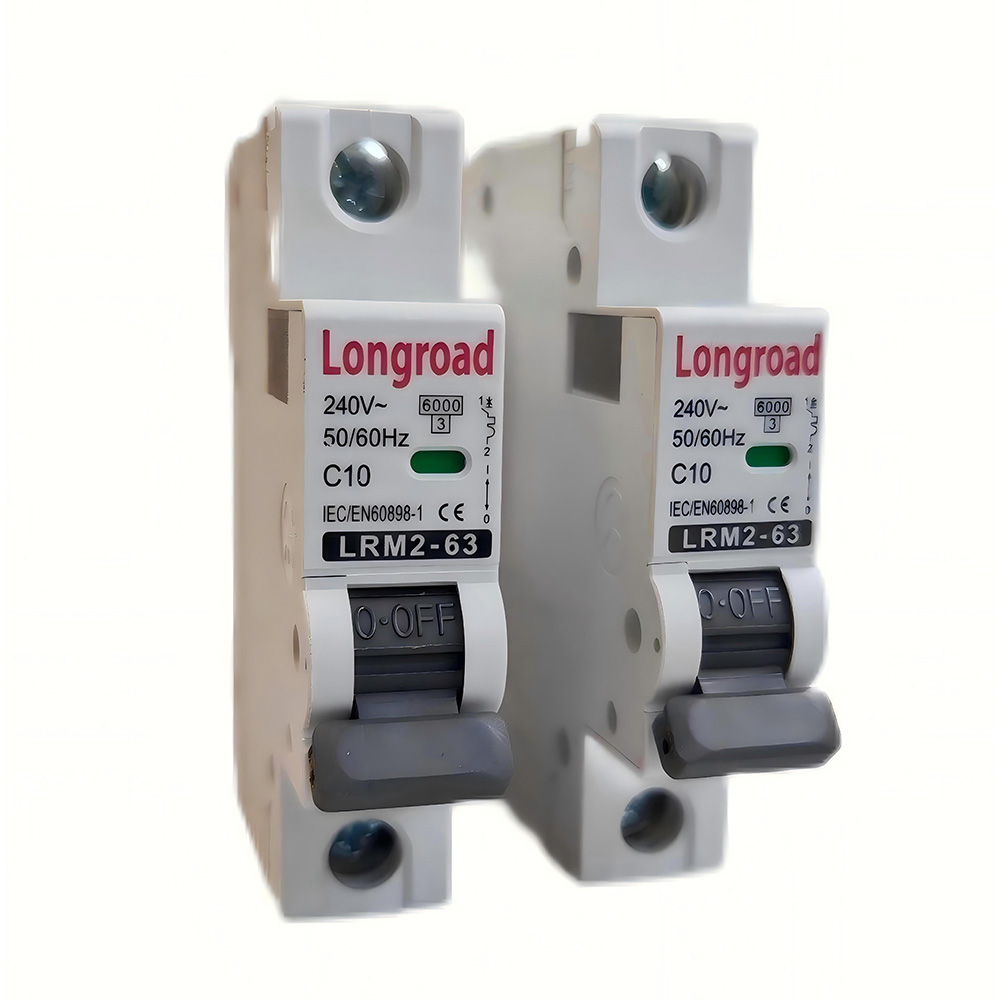
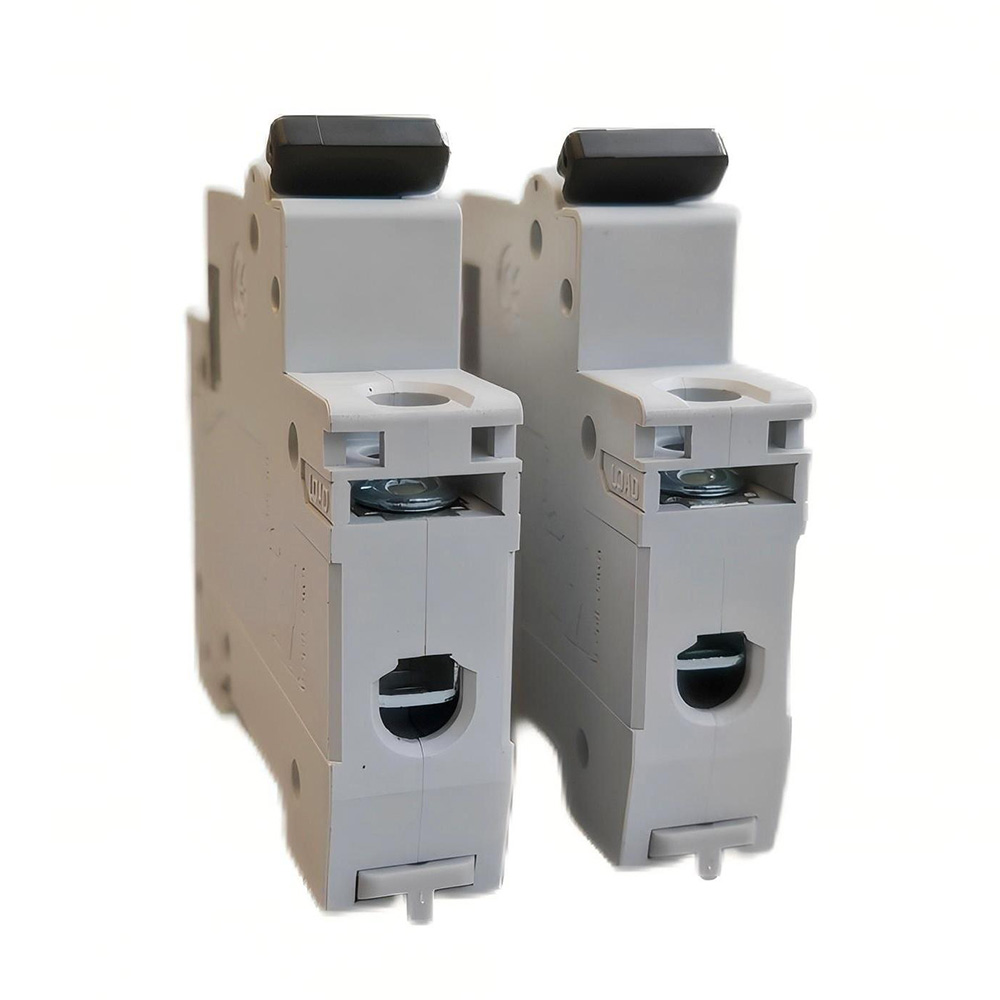
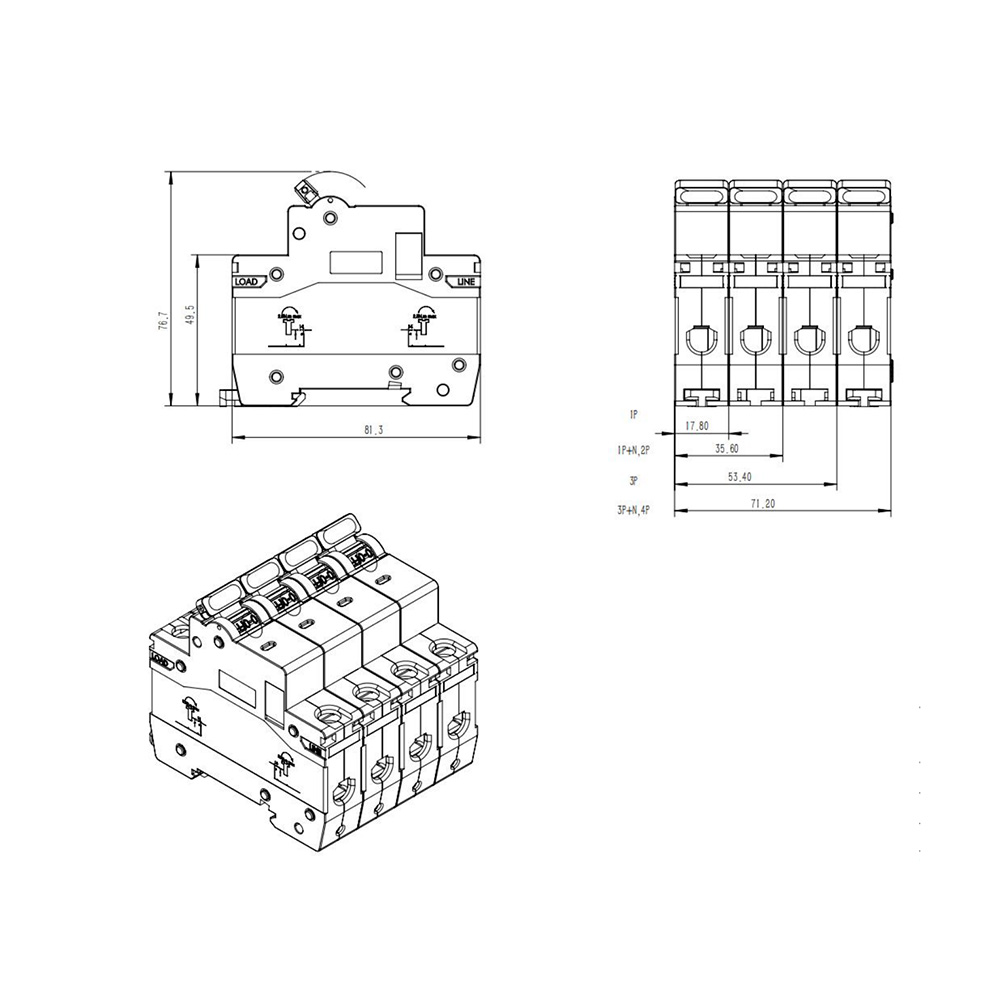
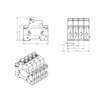
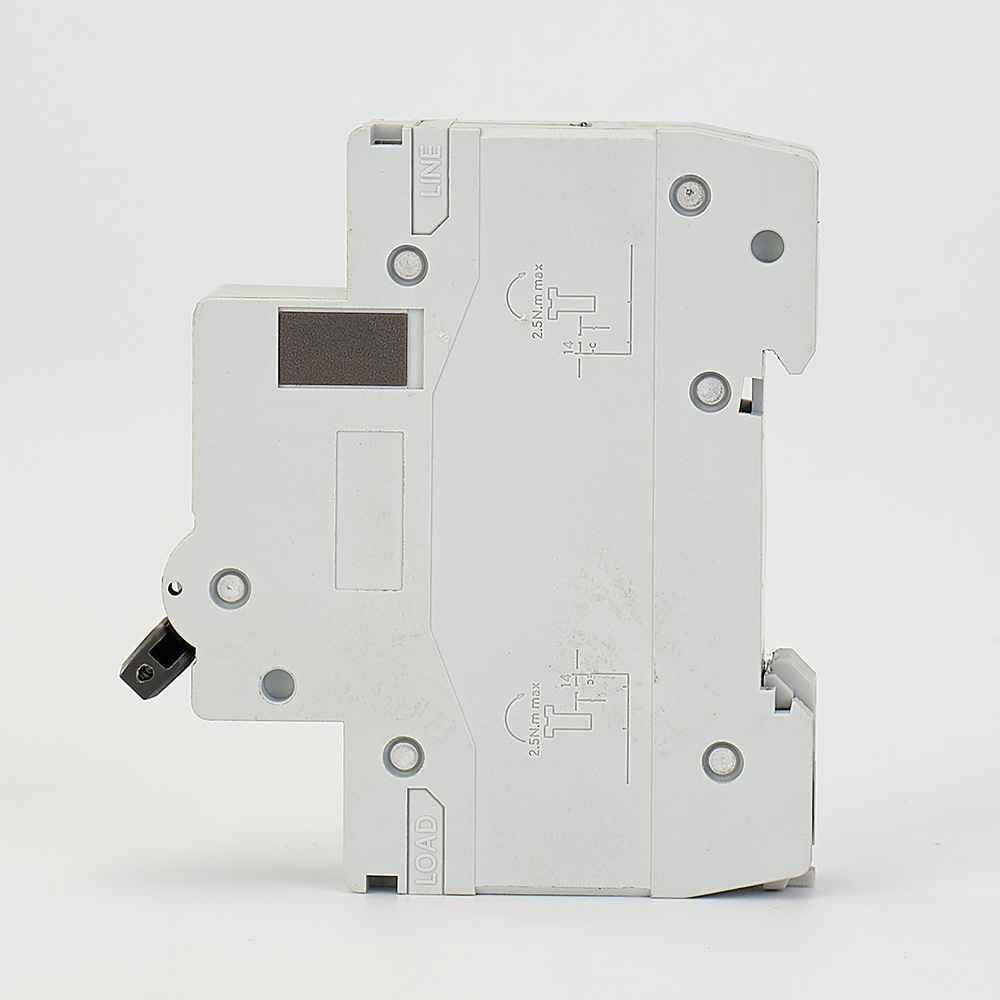
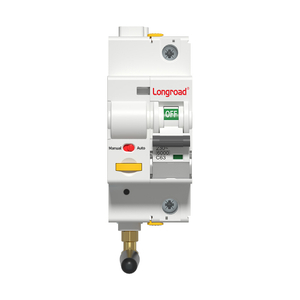
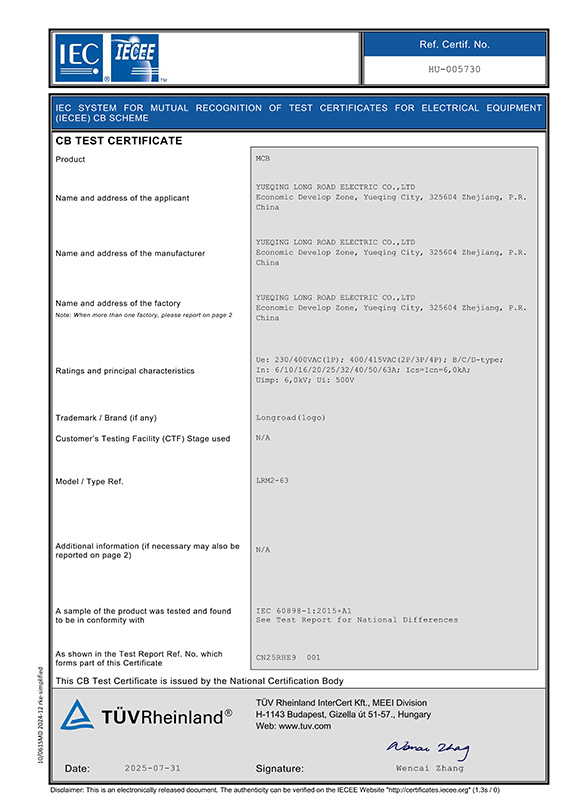
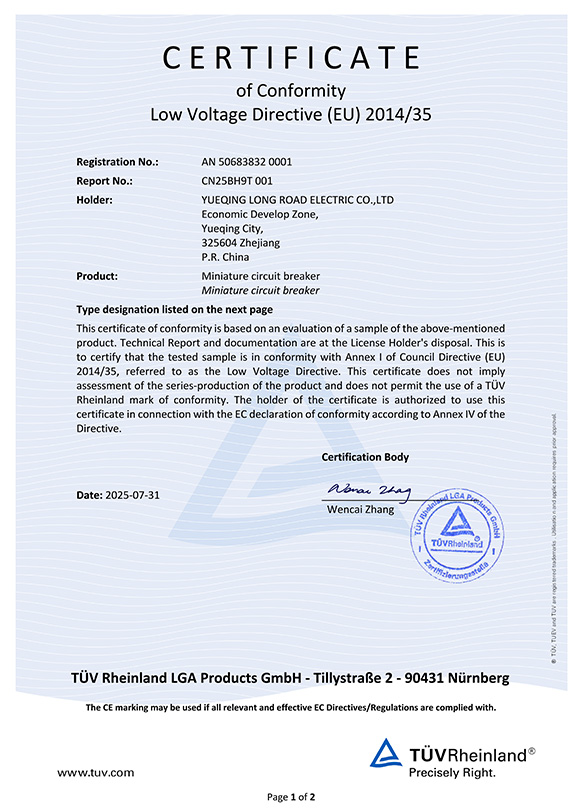
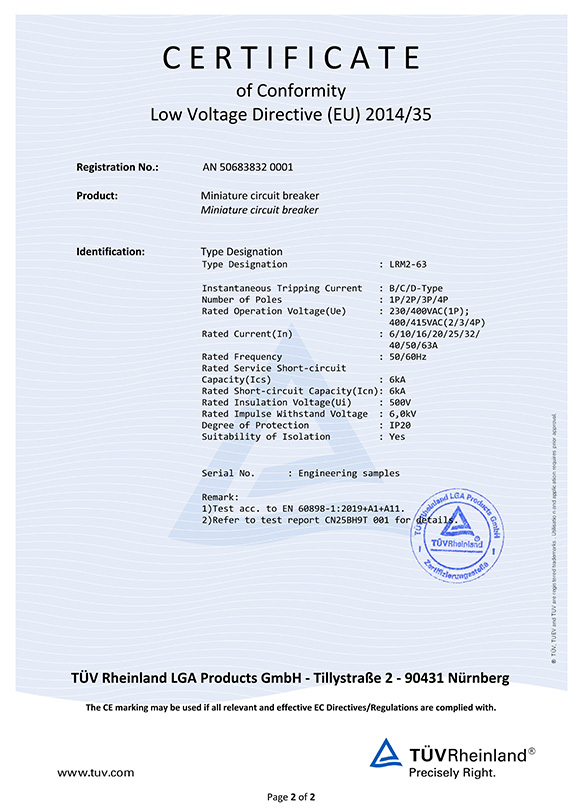
LRM2-63 1P Miniature Circuit Breaker
1. LRM2-63 1P Miniature Circuit Breaker is the most basic and commonly used terminal protection appliance in low-voltage power distribution systems. Adopting a single-pole design with a standard width of 18mm (modular number).It is rail-mounted and widely applied in AC power distribution circuits with a frequency of 50/60Hz, rated voltage of 230V (single-phase) and rated current ranging from 1A to 63A.
2. Core Structure
It mainly consists of operating mechanism, electromagnetic release, thermal release, contact system, arc extinguishing chamber and enclosure.
Wiring: Only one set of incoming/outgoing terminals, connected to the live wire (L) only; the neutral wire (N) is directly connected to the neutral busbar without passing through the circuit breaker.
Operation: Switching on/off only controls the on/off of the live wire; when tripping, only the live wire is disconnected while the neutral wire remains conductive.Quantity: 


Main Features & Advantages
1.Main Features
1.1Compact size, low cost, convenient installation, saving space in distribution boxes.
1.2.Provides overload and short-circuit protection for the live wire only, without earth leakage protection (except for earth leakage type).
1.3. Complies with standards IEC 60898, with a usual breaking capacity of 6000A 1.4.Advantages: Small size, low cost, fast installation, suitable for lighting circuits.
2. Basic Functions
2.1 Overload Protection (Thermal Protection)
Principle: The internal bimetallic strip bends when heated, pushing the tripping mechanism to disconnect with time delay.
Function: Prevents overheating of wires, insulation aging and equipment burnout in case of long-term overcurrent (e.g. 1.13~1.45 times rated current) of circuits/equipment.
2.2 Short-circuit Protection (Electromagnetic Protection)
Principle: High current generated during short circuit makes the electromagnetic coil attract the release instantly, disconnecting instantaneously (usually <0.1 second).
Function: Cuts off the power quickly in case of short-circuit faults to avoid electric arcs, fires and equipment explosions.
2.3 Manual Switching On/Off
Function: Serves as a disconnector for manual connection or disconnection of the live wire, used for maintenance and power-off operations.
2.4 Auxiliary Functions (Optional)
Can be equipped with auxiliary contacts, alarm contacts, shunt trips, etc., to realize remote control and status indication.
1P+N type: Synchronously disconnects the neutral wire, but the neutral wire has no protection function, with higher safety.
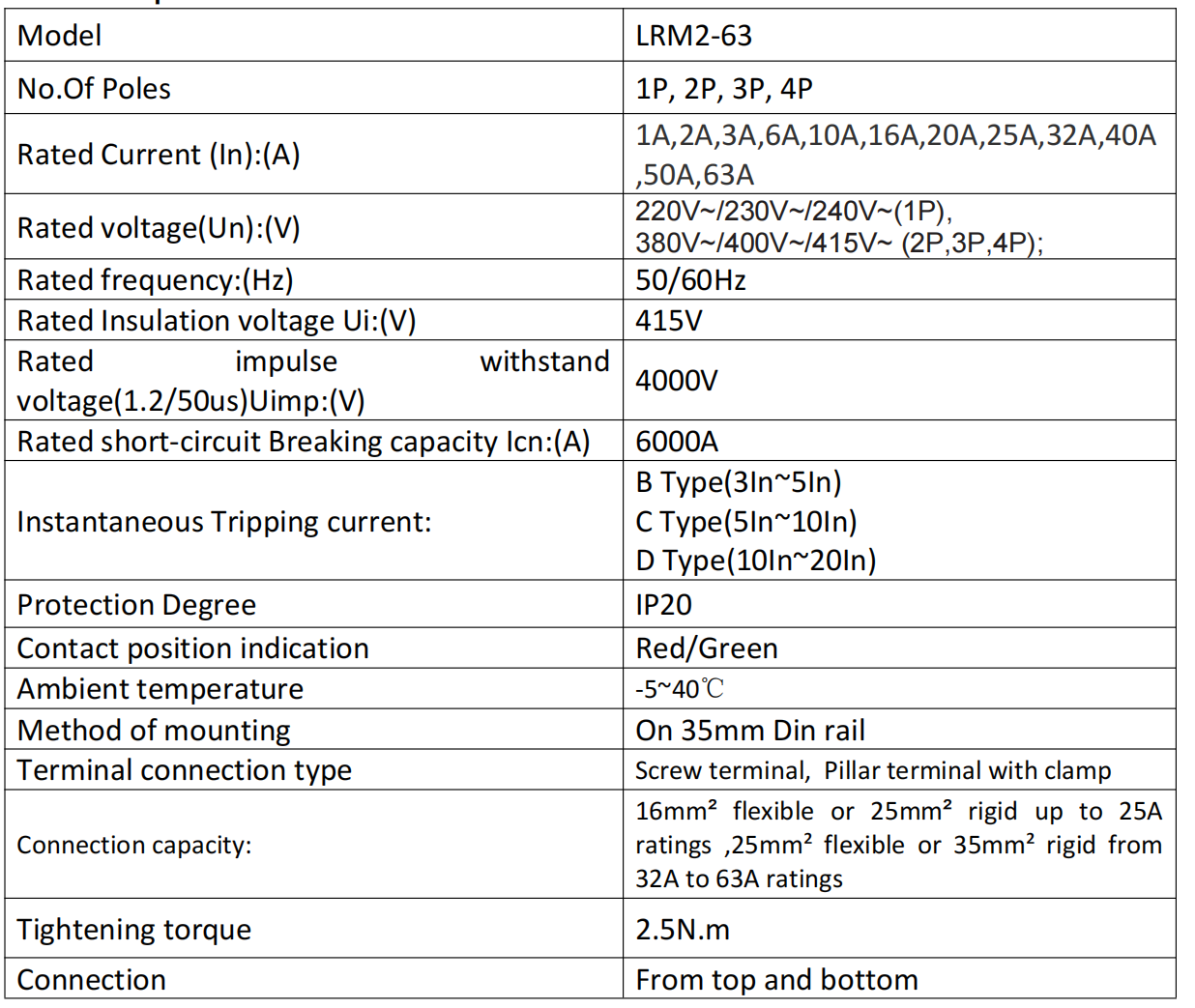
Full Technical Specifications
Product Uses
1.Pure lighting circuits in residential/commercial buildings (living room, bedroom, corridor lights).
2.Low-power resistive loads (LED lights, small fans, ordinary socket branches).
3. Old house renovation and engineering batch lighting, pursuing cost performance and space utilization.
Product Operate Guide
How to Use 1P Miniature Circuit Breaker
1. Scope of Application
1P Miniature Circuit Breaker (1P MCB) is only suitable for single-phase 220V power distribution systems, mainly used for:
Lighting circuits
Low-power general socket circuits
Not recommended for high-power electrical appliances, kitchens, bathrooms or humid locations
2. Pre-installation Preparation
Confirm parameter matching
Rated voltage: AC 230V
Rated current: Select according to the load (e.g., 6A, 10A, 16A, 20A, etc.)
Breaking capacity: 6kA/10kA
Power-off operation
Installation, wiring and replacement must be carried out under complete power-off condition. Live working is strictly prohibited.
Installation method
Standard 35mm rail mounting: clip the MCB onto the distribution box rail.
3. Correct Wiring Method (Key Point)
1P circuit breaker controls the live wire (L) only. Wiring rules:
Upper terminal: Incoming live wire L
Lower terminal: Outgoing live wire L
Neutral wire N: Do not pass through the circuit breaker, connect directly to the neutral busbar in the distribution box
Protective earth PE: Never connect to the circuit breaker; must be connected to the earth busbar separately
⚠️ It is strictly prohibited to connect the neutral wire to a 1P circuit breaker, as it may cause serious potential safety hazards.
4. Switching On and Off Operations
Switching On
Push the operating handle upward to the "ON" position
The circuit is energized and operates normally
Switching Off
Pull the handle downward to the "OFF" position
Used for maintenance, power cut, lamp replacement, etc.
Reset after tripping
After tripping due to circuit fault, the handle will stay in the middle position:
Pull it downward to OFF first
Push upward to ON to complete reset
5. Usage Precautions
Do not use the MCB beyond its rated current, otherwise frequent tripping or burnout may occur.
For humid locations (bathrooms, kitchens) and high-power appliances, 1P+N or 2P circuit breakers are recommended.
The neutral wire remains live after a 1P circuit breaker trips. Always switch off the main upstream breaker before maintenance.
Not suitable for protecting motors and other power loads (special MCBs for motor protection should be selected).
Regular inspection: check for abnormal noise, heating, burning smell or loose connections; replace immediately if any abnormality is found.
Frequently Asked Questions (FAQs)
1. Frequent tripping during normal use
Cause: Overload, live wire short circuit, poor terminal contact, aging
Solution: Reduce load/replace with suitable model, check short circuit, tighten terminals, replace aging parts
2. Trips immediately after closing
Cause: Short circuit in downstream live wire, socket or electrical appliance
Solution: Turn off load and close, check lines/inspect appliances one by one
3. Cannot close, handle stuck
Cause: Trip not reset, live wire fault not eliminated, internal damage
Solution: Switch to OFF to reset, eliminate fault, replace if damaged
4. Terminal overheating, burning smell
Cause: Loose live wire connection, small wire diameter, poor contact
Solution: Power off and tighten, replace with suitable wire diameter, clean and reconnect
5. No tripping on short circuit/overload
Cause: Trip damage, mismatched model, aging
Solution: Replace immediately, select suitable model, replace regularly
6. Abnormal noise/vibration during operation
Cause: Loose installation, slight live wire overload, internal looseness
Solution: Tighten installation, check load/terminals, replace if noisy