- Home
-
-

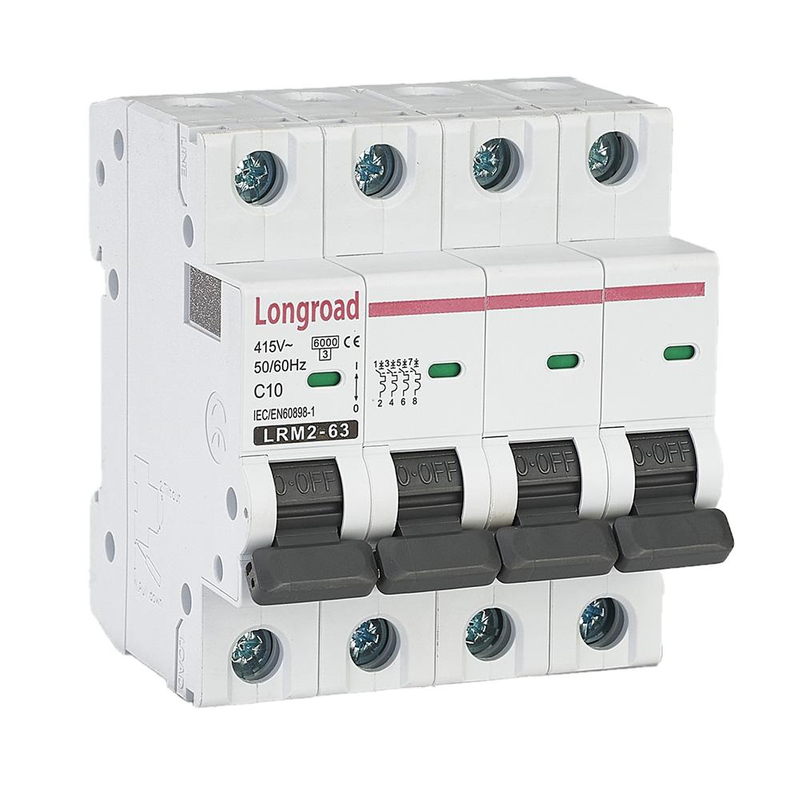
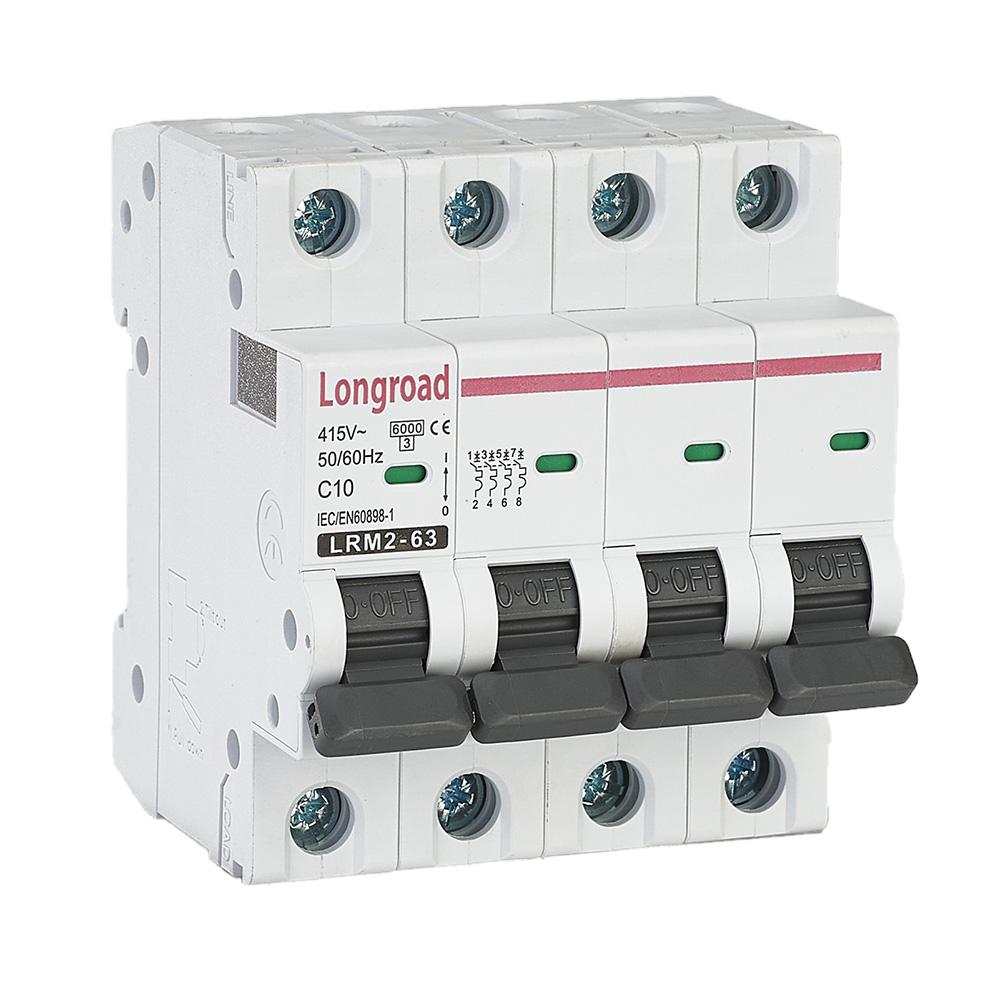
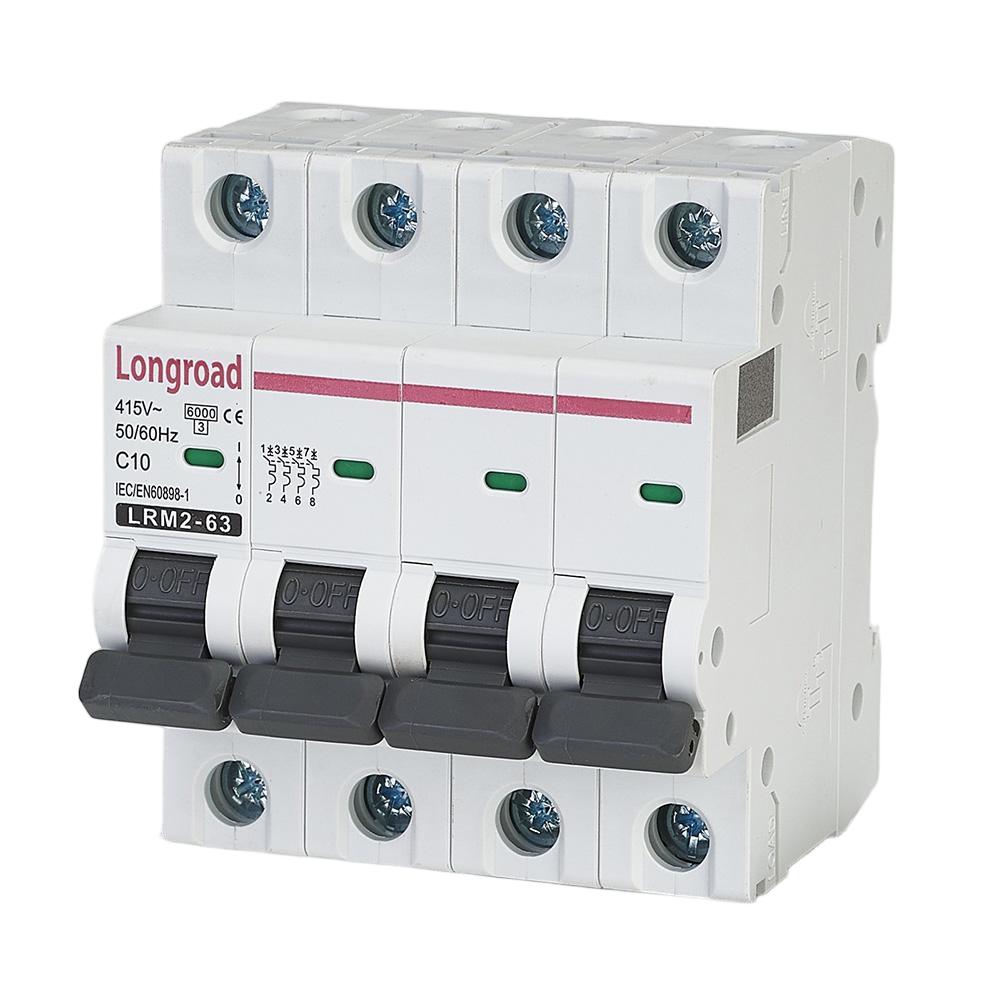
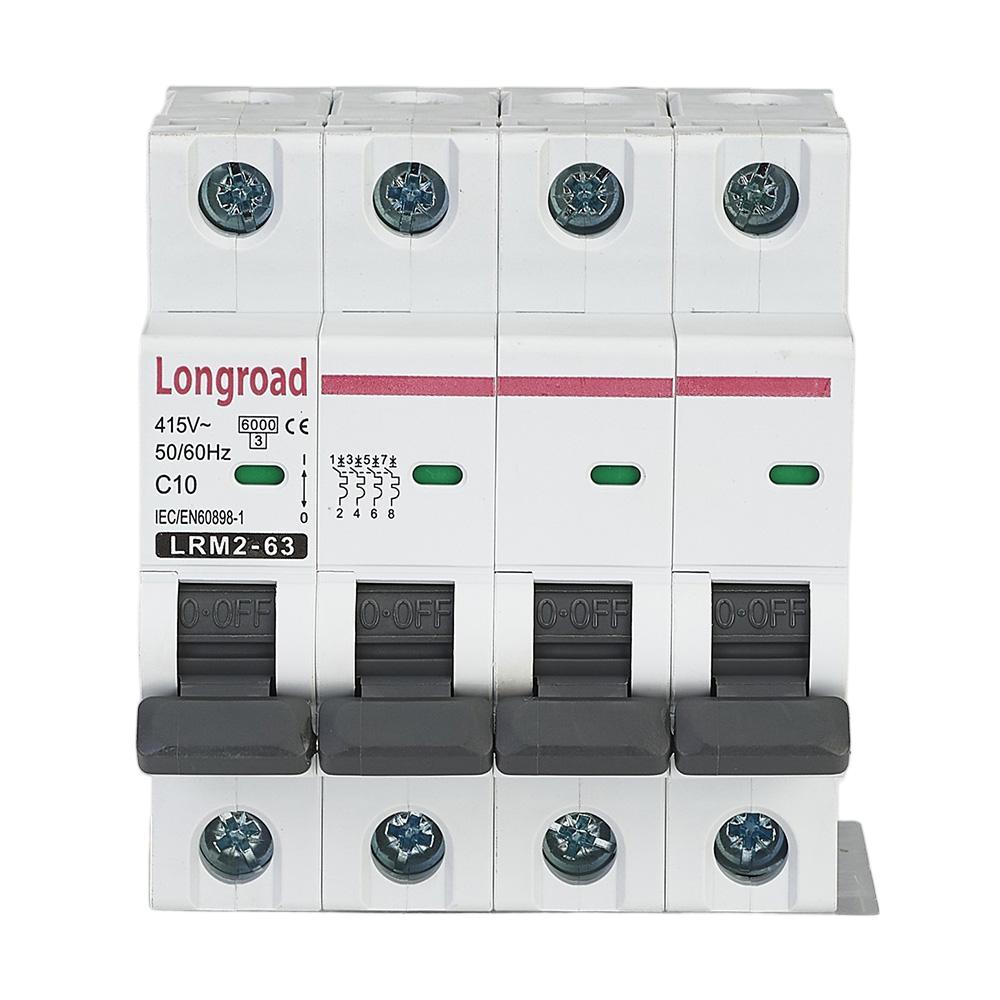
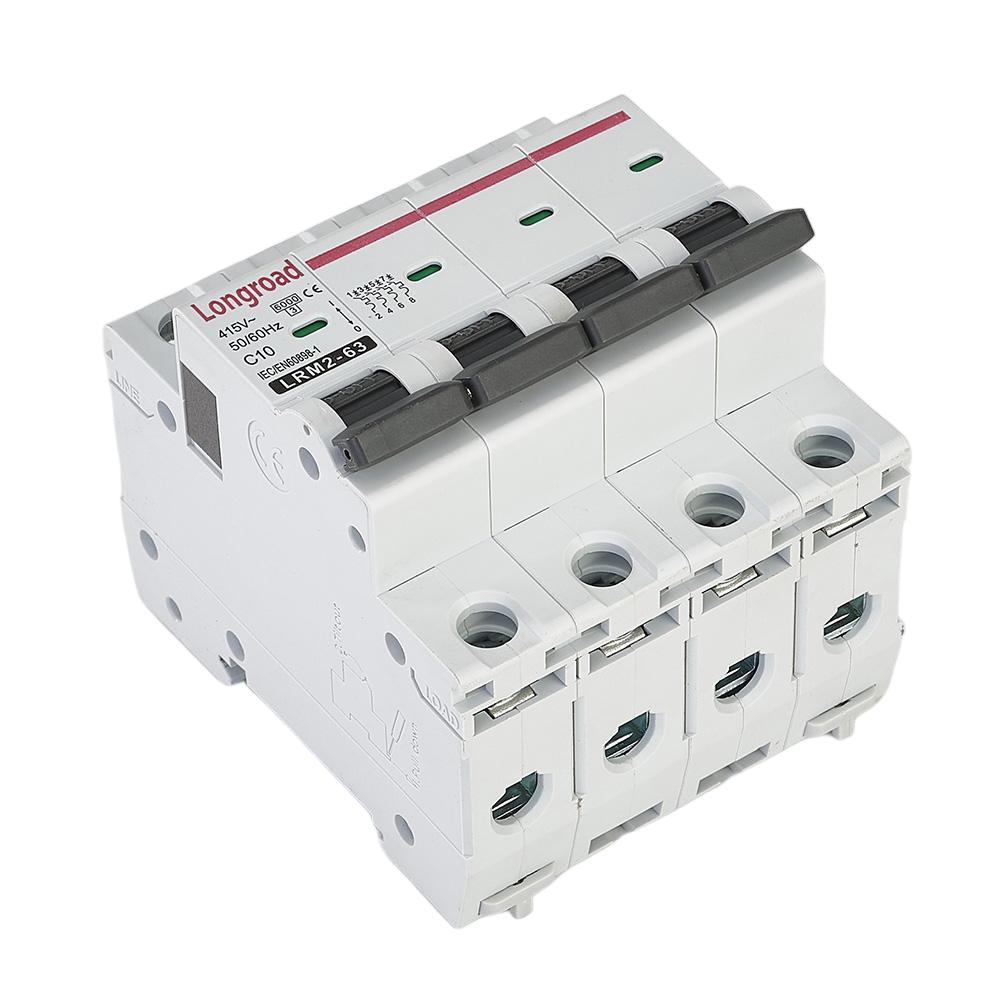
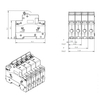
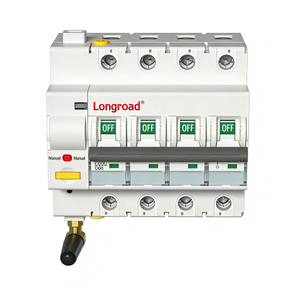
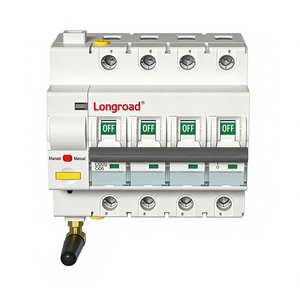
4P Miniature Circuit Breaker (4-pole MCB)
Quantity: 


Product Introduction & Overview
LRM2-63 4P MCB Introduction, Overview and Basic Functions of 4P Miniature Circuit Breaker
I. Product Introduction & Overview
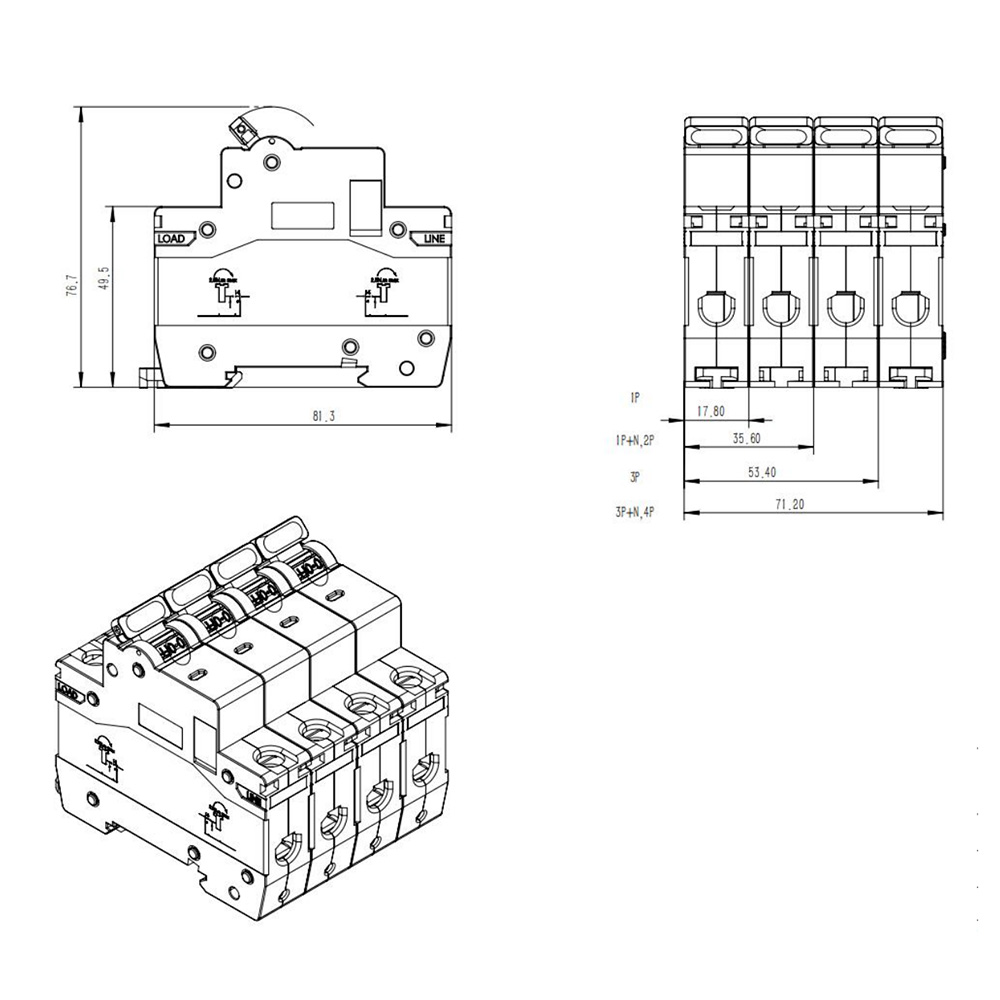
4P Miniature Circuit Breaker (4-pole MCB) is a core protective electrical device suitable for three-phase four-wire (L1+L2+L3+N) low-voltage power distribution systems. It is mainly used in AC 50/60Hz systems with a rated voltage of 400/415V, with a conventional rated current range of 1A to 63A. Adopting a standard 4×18mm modular design, it is installed on a 35mm DIN rail for easy assembly.
Compared with 3P MCBs, the 4P circuit breaker can simultaneously control three phase wires (L1/L2/L3) + neutral wire (N), with four poles switching on and off synchronously. It can effectively avoid the risk of electric shock during maintenance caused by live neutral wires, and is especially suitable for commercial, industrial and important civil power distribution scenarios that require high power supply safety and neutral wire breakage protection. Compliant with standards such as GB/T 10963 and IEC 60898, it has stable overload and short-circuit protection performance, and is often used as the main switch or branch protection switch of three-phase four-wire circuits.
II. Basic Functions
1. Short-Circuit Protection
When faults such as phase-to-phase short circuit or phase-to-ground short circuit occur in the circuit, the internal electromagnetic release acts instantaneously, cutting off the four-pole circuit within milliseconds to prevent electric arcs, equipment burnout and electrical fires.
2. Overload Protection
When the circuit is overloaded for a long time and the current exceeds the rated value, the bimetallic strip deforms due to heat and triggers delayed tripping to cut off the power supply, avoiding cable overheating and insulation aging.
3. Four-Pole Synchronous On/Off
During manual closing or fault tripping, the four poles L1/L2/L3/N are turned on/off synchronously, avoiding the risk of equipment electrification caused by unbroken neutral wires and improving maintenance safety.
4. Neutral Wire Protection and Isolation
The 4P structure can realize effective isolation and protection of the neutral wire, avoiding damage to three-phase loads and single-phase equipment caused by neutral wire breakage and abnormal neutral wire potential.
5. Manual Control and Isolation Function
It can be used as a manual switch for the circuit. Push the handle upward (ON) to close and downward (OFF) to open, meeting the safety power-off needs during equipment maintenance and line maintenance.
6. Optional Extended Functions
Some models can be equipped with accessories such as auxiliary contacts, alarm contacts, shunt trips, and undervoltage trips to realize intelligent power distribution needs such as remote control and fault signal feedback
Main Features & Advantages
2. Basic Functions
2.1. Short-Circuit Protection
When faults such as phase-to-phase short circuit or phase-to-ground short circuit occur in the circuit, the internal electromagnetic release acts instantaneously, cutting off the four-pole circuit within milliseconds to prevent electric arcs, equipment burnout and electrical fires.
2.2. Overload Protection
When the circuit is overloaded for a long time and the current exceeds the rated value, the bimetallic strip deforms due to heat and triggers delayed tripping to cut off the power supply, avoiding cable overheating and insulation aging.
2.3. Four-Pole Synchronous On/Off
During manual closing or fault tripping, the four poles L1/L2/L3/N are turned on/off synchronously, avoiding the risk of equipment electrification caused by unbroken neutral wires and improving maintenance safety.
2.4. Neutral Wire Protection and Isolation
The 4P structure can realize effective isolation and protection of the neutral wire, avoiding damage to three-phase loads and single-phase equipment caused by neutral wire breakage and abnormal neutral wire potential.
2.5. Manual Control and Isolation Function
It can be used as a manual switch for the circuit. Push the handle upward (ON) to close and downward (OFF) to open, meeting the safety power-off needs during equipment maintenance and line maintenance.
2.6. Optional Extended Functions
Some models can be equipped with accessories such as auxiliary contacts, alarm contacts, shunt trips, and undervoltage trips to realize intelligent power distribution needs such as remote control and fault signal feedback.
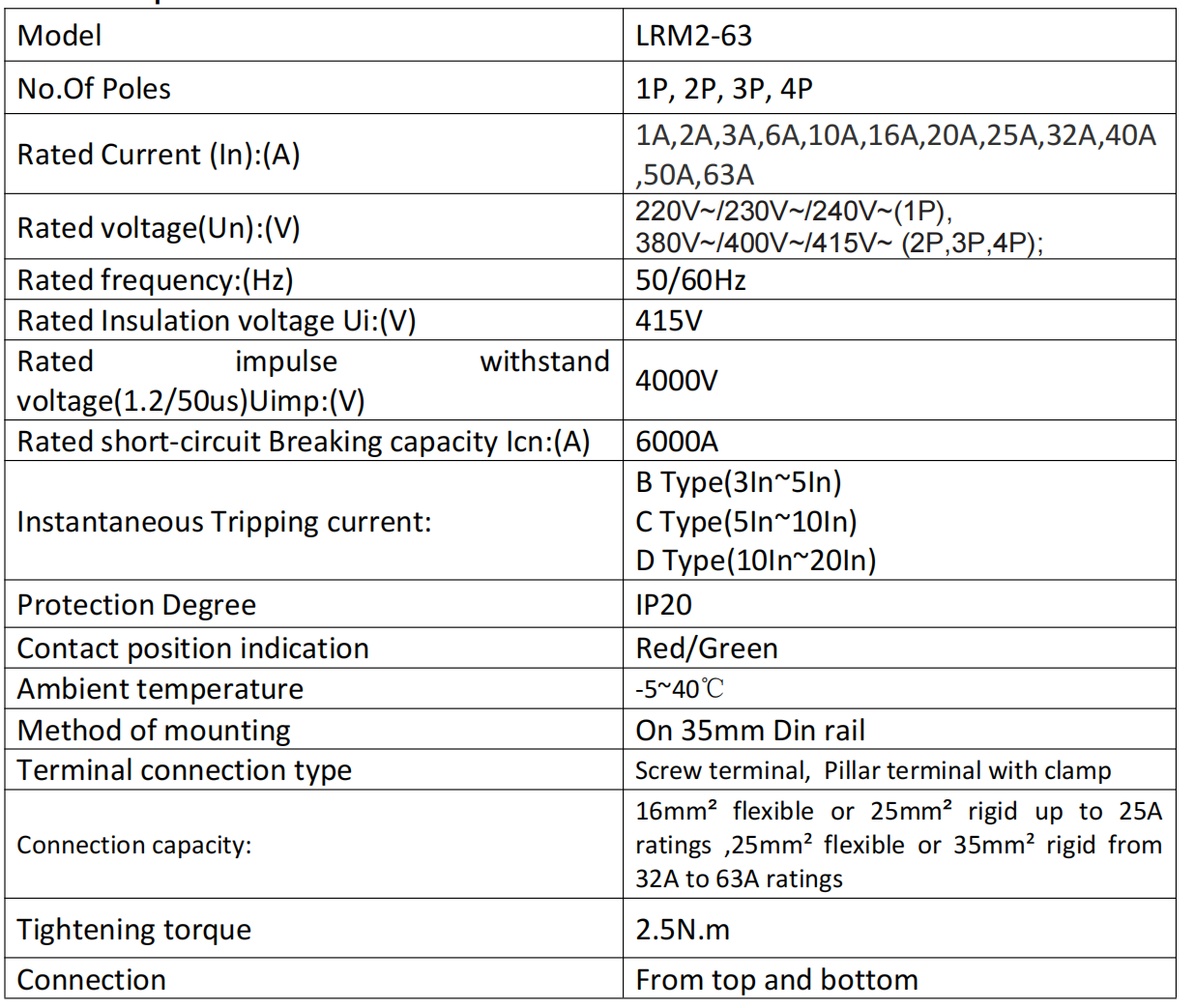
Full Technical Specifications
Product Uses
2. Basic Functions
2.1. Short-Circuit Protection
When faults such as phase-to-phase short circuit or phase-to-ground short circuit occur in the circuit, the internal electromagnetic release acts instantaneously, cutting off the four-pole circuit within milliseconds to prevent electric arcs, equipment burnout and electrical fires.
2.2. Overload Protection
When the circuit is overloaded for a long time and the current exceeds the rated value, the bimetallic strip deforms due to heat and triggers delayed tripping to cut off the power supply, avoiding cable overheating and insulation aging.
2.3. Four-Pole Synchronous On/Off
During manual closing or fault tripping, the four poles L1/L2/L3/N are turned on/off synchronously, avoiding the risk of equipment electrification caused by unbroken neutral wires and improving maintenance safety.
2.4. Neutral Wire Protection and Isolation
The 4P structure can realize effective isolation and protection of the neutral wire, avoiding damage to three-phase loads and single-phase equipment caused by neutral wire breakage and abnormal neutral wire potential.
2.5. Manual Control and Isolation Function
It can be used as a manual switch for the circuit. Push the handle upward (ON) to close and downward (OFF) to open, meeting the safety power-off needs during equipment maintenance and line maintenance.
2.6. Optional Extended Functions
Some models can be equipped with accessories such as auxiliary contacts, alarm contacts, shunt trips, and undervoltage trips to realize intelligent power distribution needs such as remote control and fault signal feedback.
How to Use 3P Miniature Circuit Breaker
1. Scope of Application
3P Miniature Circuit Breaker is suitable for three-phase power distribution systems with AC 50/60Hz and rated voltage of 380V/400V, mainly used for:
- Circuit protection and control of three-phase power equipment such as industrial production lines, three-phase motors and water pumps
- High-power three-phase load circuits such as three-phase distribution cabinets and air conditioning units in commercial places
- Main incoming switches or three-phase branch switches for three-phase power supply in large residences and villas
- Power distribution scenarios requiring high three-phase power supply balance and protection reliability
2. Pre-installation Notes
2.1. Installation and wiring must be carried out under complete power-off condition. Live working is strictly prohibited to avoid three-phase short circuit or electric shock accidents.
2.2. Confirm that the circuit breaker parameters match the circuit: rated voltage 380V/400V, rated current compatible with the total current of three-phase load (1A~63A), and breaking capacity (usually 6kA/10kA) meets the circuit requirements.
2.3. Install on a 35mm standard DIN rail and fix it in the distribution box to ensure firm installation and avoid vibration during operation.
2.4. Before installation, check the appearance of the circuit breaker to confirm that there is no damage, the handle is flexible, and there is no foreign matter blocking inside.
3. Correct Wiring Method (Key Point)
The 3P circuit breaker synchronously controls three phase wires (L1, L2, L3) and does not connect to the neutral wire (N) or protective earth wire (PE). The wiring rules are as follows:
- Upper terminals: Connect incoming phase wires L1, L2, L3 in sequence (the wiring order must correspond to the phase wires of downstream equipment to avoid reverse connection of three phases)
- Lower terminals: Connect outgoing phase wires L1, L2, L3 in sequence to the downstream three-phase equipment or circuit
- Neutral wire (N): Directly connect to the neutral busbar in the distribution box without passing through the 3P circuit breaker
- Protective earth wire (PE): Connect separately to the earth busbar in the distribution box, and it is strictly prohibited to connect to any terminal of the circuit breaker
⚠️ Note: The wiring must be firm to avoid terminal overheating caused by looseness; wrong connection or missing connection of phase wires is strictly prohibited, otherwise it will cause equipment failure or safety hazards.
4. Operation Instructions
4.1 Switching On for Power Supply
Push the operating handle upward to the "ON" position, all three phase wires are turned on simultaneously, the three-phase circuit supplies power normally, and ensure the three-phase current balance of downstream equipment.
4.2 Switching Off for Power Cut
Pull the operating handle downward to the "OFF" position, all three phase wires are disconnected synchronously, the entire three-phase circuit is completely de-energized, and maintenance and equipment replacement operations can be performed.
4.3 Reset After Tripping
When a short circuit, overload or other faults occur in the circuit, the circuit breaker will trip automatically, The reset steps are as follows:
1). First check and eliminate circuit faults (such as three-phase short circuit, load overload, etc.);
2). Firmly pull the handle down to the "OFF" position to complete the mechanism reset;
3). Then push the handle upward to the "ON" position to restore power supply.
5. Safety Precautions
5.1. It is strictly prohibited to use beyond the rated current and breaking capacity, otherwise it will cause frequent tripping, overheating and burning of the circuit breaker, and even lead to safety accidents.
5.2. After tripping, the fault must be eliminated first before resetting. Forcible closing is strictly prohibited to avoid equipment damage or secondary faults.
5.3. During maintenance, in addition to disconnecting the 3P circuit breaker, it is necessary to confirm that the upper main switch is disconnected to prevent accidental power supply; after maintenance, check the phase wire connection order to avoid reverse connection.
5.4. Regularly inspect the circuit breaker: check for abnormalities such as abnormal noise, terminal overheating, and loose handle. If a fault occurs, stop using it immediately and replace it. Do not disassemble or repair it by yourself.
5.5. It is not suitable for single-phase load circuits. For single-phase loads, 1P or 2P miniature circuit breakers are recommended.
6. Common Troubleshooting
6.1. Trips immediately after closing: mostly due to three-phase circuit short circuit or reverse phase wire connection. Check the wiring, downstream equipment and lines, and close after eliminating the short circuit fault.
6.2. Frequent tripping during normal use: load overload or undersized circuit breaker model. Reduce the total three-phase load or replace with a 3P circuit breaker with higher rated current.
6.3. Cannot close, handle stuck: the tripping mechanism is not reset or the fault is not eliminated. First pull to "OFF" to reset, check the fault and then try to close; replace if damaged.
6.4. Terminal overheating and burning smell: loose wiring or undersized wire diameter. Tighten the wiring screws after power off and replace with wires of appropriate diameter.
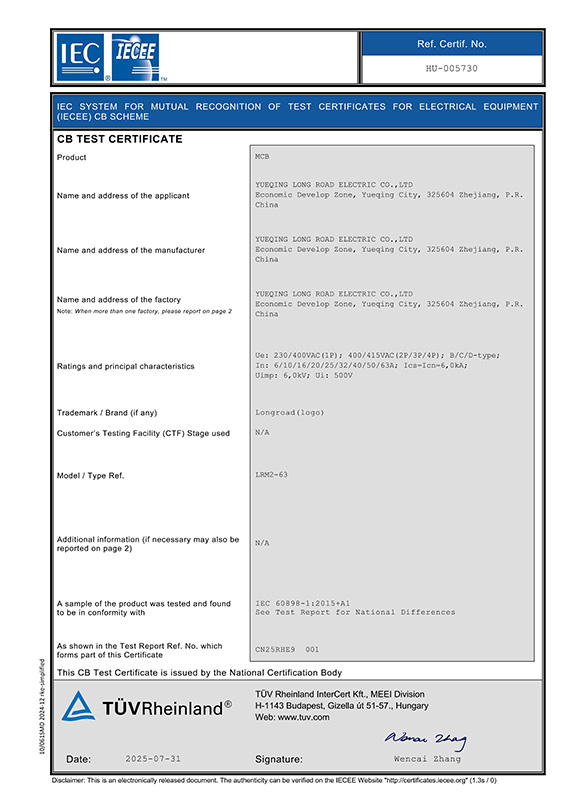
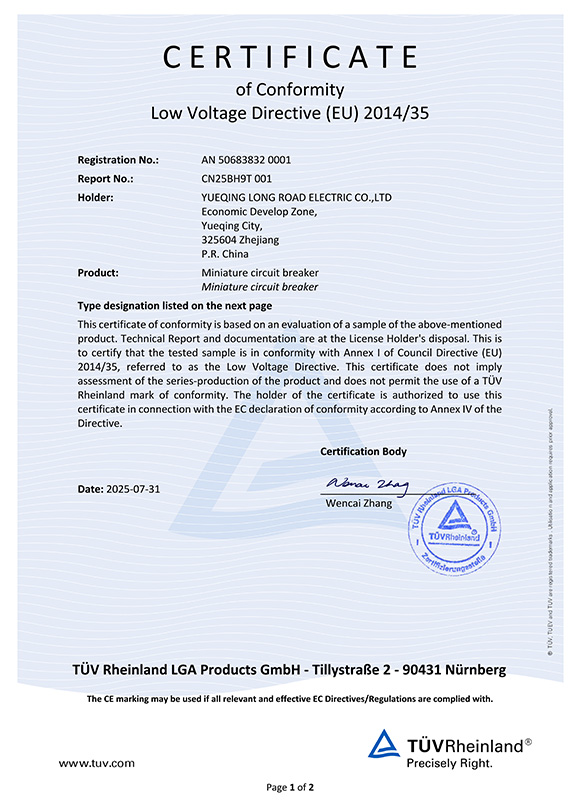
Product Operate Guide
Usage Method of 4-Pole Miniature Circuit Breaker (Simplified Version)
The 4-pole miniature circuit breaker is suitable for the three-phase four-wire low-voltage power distribution system, mainly used for circuit protection and on-off control. The following is a simplified version of the usage method and precautions, which is easy to operate and understand.
1. Preparation Before Use
1.1. Parameter Check: Confirm that the rated current and breaking capacity of the circuit breaker match the load requirements of the circuit. Check the wiring terminals to ensure the correct connection of L1, L2, L3 (phase wires) and N (neutral wire), and it is strictly prohibited to reverse or miss the connection.
1.2. Appearance and Circuit Inspection: Check that the circuit breaker shell is free of damage, the handle is flexible, and there is no loose wiring. Check the circuit for short circuits to ensure no potential safety hazards before operation.
2. Closing Operation (Power On)
2.1. Wear insulating gloves, confirm that the downstream load is disconnected, and push the handle upward to the "ON" position until it clicks into place.
2.2. After closing, check that the downstream equipment operates normally, and the circuit breaker has no abnormal heating or abnormal noise, which means the closing is successful.
3. Opening Operation (Power Off)
3.1. Normal Opening: Pull the handle downward to the "OFF" position to ensure that the four poles are disconnected synchronously and the circuit is powered off.
3.2. Fault Opening: If the circuit breaker trips automatically due to overload or short circuit, first troubleshoot and eliminate faults (such as short circuit, overload), then reset the handle to the "OFF" position, and then close again.
3.3. Emergency Opening: In case of emergency, quickly pull the handle to the opening position to cut off all power supply immediately.
4. Daily Maintenance and Safety Precautions
4.1. Regular Inspection: Check the terminals for looseness and the handle for flexibility every month; test the tripping sensitivity every quarter.
4.2. Safety Taboos: Wear insulating gloves during operation; do not touch the terminals with bare hands when the power is on; do not force closing if the fault is not eliminated.
4.3. Professional Operation: Installation, maintenance and fault handling must be performed by professional electricians; non-professionals are prohibited from operating.
Frequently Asked Questions (FAQs)
4-Pole Miniature Circuit Breaker - Common Problems & Solutions
1. Trips immediately when closing
Cause: Short circuit in three-phase four-wire circuit, wrong connection of phase/neutral wires, internal short circuit of downstream equipment
Solution: Cut off power, troubleshoot short circuit faults, correct phase/neutral wire connection, close after eliminating faults
2. Frequent tripping during normal use
Cause: Total load overload, mismatched breaker model (rated current), poor contact of phase/neutral wire terminals
Solution: Reduce total load, replace with 4P breaker of matching rated current, check and fasten all terminals
3. Unable to close, handle stuck
Cause: Tripping mechanism not reset, uneliminated circuit faults, damaged internal mechanical structure
Solution: Reset handle to "OFF" position, eliminate faults; replace with new one if still stuck
4. Terminal overheating with burning smell
Cause: Loose phase/neutral wiring, undersized wire diameter, poor terminal contact
Solution: Cut off power immediately, tighten screws, replace with suitable wire, clean terminals and reconnect
5. No tripping during short circuit/overload
Cause: Damaged tripping mechanism, wrong model selection, aged breaker
Solution: Stop using and replace, select model matching load current, replace aged components regularly
6. Abnormal noise/vibration during operation
Cause: Loose DIN rail installation, unbalanced three-phase load, loose internal structure
Solution: Fasten installation screws, check load balance, replace if noise persists
7. Neutral wire live after tripping
Cause: Wrong neutral wire connection, incomplete disconnection of 4-pole
Solution: Cut off power, recheck neutral wire connection, replace faulty breaker if necessary