- Home
-
-

10 Mistakes to Avoid When Installing Smart Circuit Breakers
Views: 0 Author: Site Editor Publish Time: 2026-10-15 Origin: Site


A Smart MCB installation has two layers of risk: the normal electrical risks of working in and designing a distribution system, and the operational risks introduced by connected control. The device may be compact, but it connects protection, wiring, a load, people, communications, and an operating procedure. This guide highlights common mistakes to avoid before and during a professional installation. It is not a substitute for the manufacturer’s instructions, the applicable electrical code, or the qualified electrical personnel responsible for the work.Key Takeaways
Confirm electrical suitability before discussing apps, gateways, or automation.
Use the exact model wiring diagram and instructions; do not infer terminals or protection settings from a similar unit.
Plan the network, local override, user permissions, and response process before commissioning.
Test the installed system as a circuit and an operating workflow, not only as a device that appears online.
1. Selecting the device from the feature list instead of the circuit
Remote switching, schedules, and a phone interface can be attractive, but they are never the starting point. The responsible designer must establish the circuit voltage, load characteristics, conductor arrangement, available fault conditions, protective coordination, required poles, environmental conditions, and applicable standard. A Smart MCB is acceptable only after the exact model satisfies those requirements. Choosing an unsuitable current rating or breaking capacity cannot be corrected in software.
2. Treating “1P” or “2P” as a universal wiring instruction
Pole count describes the device configuration; it does not replace a wiring design. The conductors that may be switched, the earthing arrangement, the neutral arrangement, and the local code all need to be considered. Never use an online diagram for a different product as an installation drawing. The product manual and the panel design must agree before a conductor is terminated.
3. Working on a live or inadequately isolated panel
Smart functions do not reduce the hazards of electrical work. Qualified personnel must use the site’s isolation, lockout/tagout, verification, and PPE procedures. A remote command is not proof that a circuit is dead. Before work begins, establish a safe work boundary, isolate the correct sources, verify absence of voltage using an appropriate method, and prevent unintended re-energization. The project’s written procedure and local regulations govern the work.
4. Assuming every DIN rail and enclosure is ready for the device
DIN-rail mounting is convenient, but it is not the whole installation check. Confirm physical module space, rail compatibility, enclosure condition, terminal access, bend radius, heat dissipation, labeling, and clearance for the installed equipment. Connected breakers also need a practical path for any necessary neutral or auxiliary wiring and for the selected communications method. A crowded panel is harder to inspect and more difficult to maintain safely.
5. Ignoring the communications design until the device is energized
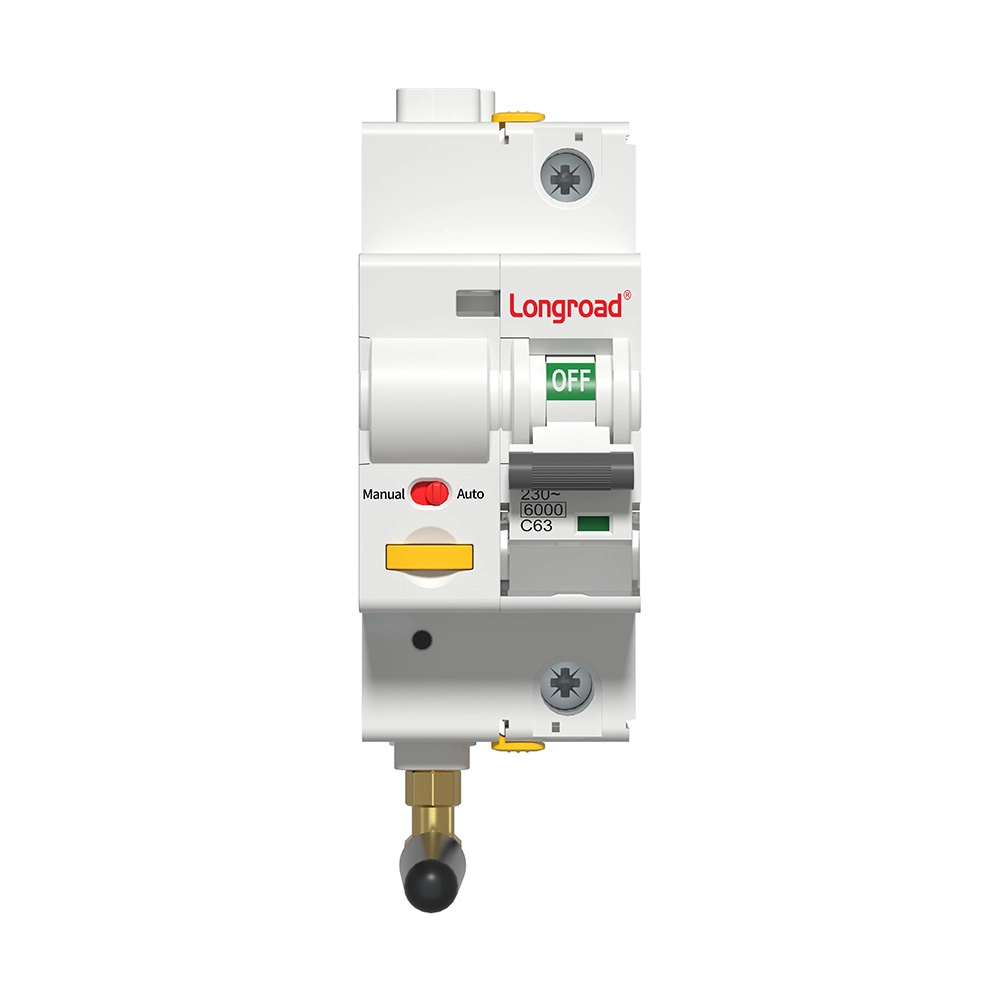
A Smart MCB is not usefully “smart” if its intended communications path is unreliable or unmanaged. Before commissioning, decide whether the project uses ZigBee, WiFi, RS485, dry contact, or another supported route. Check gateway placement, panel shielding, network segmentation, credential ownership, signal testing, addressing, and the expected behavior after a loss of service. Treat the network plan as a part of the engineering scope, not a final-stage app task.
Long Road Electric lists its 1P Smart MCB ZigBee building automation system as a Tuya-compatible LRR6 product with remote switching, timed operation, manual/automatic control, and several communications options. Confirm the exact supplied model and protocol before designing around any of those features.
6. Reversing terminals or skipping manufacturer torque requirements
Terminal designations, line/load orientation, conductor sizes, stripping lengths, and torque values are product-specific. Guessing can damage equipment, create a poor connection, or produce unsafe operation. Use the current manufacturer documentation, a calibrated tool where required, and the project’s inspection process. Record critical checks in the commissioning documentation instead of relying on memory.
7. Copying protection thresholds from another project
When a connected product allows configurable thresholds or functions, it can be tempting to reuse values from a previous site. That is risky. Settings must reflect the actual circuit and coordination study, the selected device, the connected load, and the project requirements. A configuration that worked in an apartment circuit can be inappropriate in a commercial panel or a process application. Changes need an authorized owner and a revision record.
8. Giving remote control to users without operational boundaries
Remote access can help a facilities team, but it also makes it possible to switch a load without seeing what is happening at the location. Define the circuit purpose, authorized users, prohibited times, local override process, and communication path for a remote command. Do not enable general remote control of a circuit that could affect people, critical services, maintenance activities, or equipment without a documented risk assessment.
9. Testing only the app screen, not the complete operating scenario
A successful pairing screen is not a completed commissioning test. Test the intended sequence: local operation, indicated status, communications, approved control commands, alarm or notification routing, schedule behavior, loss of communications, authorized overrides, and recovery. Verify that circuit labels in the app match the physical panel labels. Record exceptions and resolve them before handover. The test scope must be designed by the qualified project team so it does not introduce unsafe energization or interruption.
Commissioning check
Question to answer
Typical evidence
Electrical identification
Is the installed model correct for the approved circuit?
Model, ratings, location, and drawing check.
Mechanical installation
Is the device secure and accessible?
Inspection record and panel photograph under site procedure.
Control mapping
Does the displayed name match the physical circuit?
Controlled point-to-point verification.
Communications resilience
What happens when the network path is interrupted?
Documented test of expected local and remote behavior.
Handover
Do operators know the limits of remote control?
Training, permissions, and escalation record.
10. Forgetting that handover is part of the installation
Connected equipment needs a named owner after the electrician leaves. Handover should include the as-built circuit record, model and firmware information, approved settings, communication details, account ownership, permissions, local manual operating method, maintenance limits, and escalation contacts. If the device is part of a larger building-management or property-management workflow, decide who owns schedules and who can change them.
For a wider MCB selection discussion, Long Road Electric’s MCB product category can be used as an internal reference during product review. The final installation choice should always be tied back to the approved electrical design and the exact documentation for the ordered device.
A safer installation sequence
A reliable sequence is straightforward: define the operating purpose; verify the electrical design; choose the exact product; plan panel space and communications; install under safe work controls; inspect and test according to the approved procedure; commission the operating rules; and hand over a documented system. Each stage prevents a different failure mode. Skipping early decisions normally creates rework later, especially when a device cannot connect, a circuit label is wrong, or the remote-control boundary is unclear.
Long Road Electric can be part of that selection process when its documented Smart MCB functions and the project requirements align. The important discipline is to compare the current product documentation against the circuit and the deployment plan rather than treating a smart feature as a shortcut around engineering judgment.
Documentation that makes future maintenance safer
The installed breaker should be easy to identify years after commissioning. Record the panel reference, circuit description, exact model, visible ratings, protocol or gateway relationship, approved settings, and the person or team responsible for the connected function. Keep manufacturer documents with the project record rather than relying on a generic web search during a fault. Update the record whenever a circuit load, account, gateway, or control rule changes.
A useful handover also explains what the device is not intended to do. State the restrictions on remote operation, any loads that must not be scheduled, and the process for safe local isolation. This prevents a later operator from treating an app control as a maintenance isolation device or using a historical configuration as an instruction for a revised circuit.
What to do when commissioning reveals a problem
Do not hide a failed pairing, unclear label, unexpected trip, or inconsistent status to meet a handover date. Return to the appropriate design stage. A network problem may require gateway relocation or a different communications plan; a label problem may reveal an undocumented circuit; an unexpected electrical response may require design review. Commissioning is the controlled opportunity to find these issues before a system is trusted in normal operations.
Only the qualified project team can decide when the installation is ready for normal service. Their record should identify the tests completed, any conditions or exclusions, and the people authorized to change operational settings. That record turns a device installation into an maintainable system.
When to pause the installation
Pause and seek design clarification if the circuit identity is uncertain, the electrical ratings do not match the approved documents, the installation instructions are unavailable, a conductor arrangement is unclear, a network path is not ready, or a proposed remote function has no safe owner. These are not minor commissioning inconveniences. They are conditions that can produce unsafe operation, misleading control, or expensive rework once the panel is in service.
A planned pause is a professional control. Record the open issue, isolate it from other work, and resolve it through the appropriate electrical or controls authority. The pressure to complete pairing or demonstrate a remote command should never override the need for a verified circuit and a safe procedure.
Use controlled acceptance criteria
Agree acceptance criteria before the work starts. They should cover the exact installed model, safe mechanical and electrical completion, clear labels, approved control mapping, communications checks, role-based access, and documented handover. When criteria are explicit, a demonstration can be useful evidence; when they are vague, a successful app login can be mistaken for a finished installation. Keep unresolved items visible until they are closed by the appropriate authority.
Coordinate electrical and controls responsibilities
On larger jobs, the electrical installer, controls integrator, IT team, property operator, and safety authority may each own part of the result. Agree the handoff points before work begins. The electrical team should not be asked to approve a cloud account policy, and the controls team should not assume electrical suitability from a device appearing online. A shared commissioning record keeps these responsibilities visible and helps every team know which issue it is authorized to resolve.
Conclusion
Most Smart MCB problems are created before the first pairing attempt: a device was selected for the wrong circuit, the panel was not assessed, the network was not planned, or remote control was enabled without ownership. Avoiding these ten mistakes means treating connected protection equipment as both an electrical device and an operating system component. Use qualified professionals, follow the exact product instructions, and leave the site with clear labels, tested behavior, and controlled access.
FAQs
Can a Smart MCB be installed by a building owner?
Installation and commissioning should be undertaken by qualified electrical professionals following the approved design, manufacturer instructions, and applicable local requirements. Connected controls do not remove normal electrical-work hazards.
Does a Smart MCB need a network connection to protect the circuit?
Protective operation and connected features should be assessed separately from the exact documentation. The network supports the specified remote functions; do not assume how any product behaves during a network failure without verification.
Why should app labels match panel labels?
Correct identification helps prevent an operator from sending a command to the wrong circuit. It also makes troubleshooting, maintenance, and handover more reliable.
Can Smart MCB settings be changed after handover?
They can only be changed through an authorized change-control process that confirms the impact on the circuit, the load, and any coordinated protection or automation logic.
What should be tested before remote control is enabled?
At minimum, the project team should test the electrical installation, device identity, local operation, communications, permitted commands, loss-of-connection behavior, user permissions, and required recovery process.
Is WiFi always the best choice for a smart breaker?
No. The right protocol depends on the product, site network, required reliability, integration architecture, physical signal conditions, and how the system will be managed over time.