- Home
-
-

Safety protection: plug-in circuit breaker circuit protection function
Views: 0 Author: Site Editor Publish Time: 2026-06-25 Origin: Site


The primary function of a plug-in circuit breaker is to provide essential circuit protection by automatically interrupting electrical flow when it detects overcurrent, short-circuit, or leakage conditions, thereby preventing potential damage and fire hazards.
This article explores the critical role of modern circuit protection technology, with a specific focus on the versatile and highly effective Adjustable Current Circuit Breaker. By understanding these mechanisms, property owners and facility managers can make informed decisions to optimize their electrical distribution networks, enhance overall safety protocols, and ensure compliance with ever-changing electrical standards.
Table of Contents
Section
Summary
Understanding the Importance of Circuit Protection
An overview of why circuit protection is vital for electrical safety and system reliability.
How an Adjustable Current Circuit Breaker Enhances Safety
Explains the operational principles of adjustable devices in safeguarding sensitive equipment.
Key Benefits of Using Adjustable Current Circuit Breakers
Details the advantages, including flexibility, precision, and operational efficiency in electrical networks.
Applications of Modern Circuit Protection Devices
Discusses practical scenarios, such as residential energy metering and utility service connections.
Maintaining Your Circuit Protection Infrastructure
Best practices for the ongoing monitoring and maintenance of circuit breaker systems.
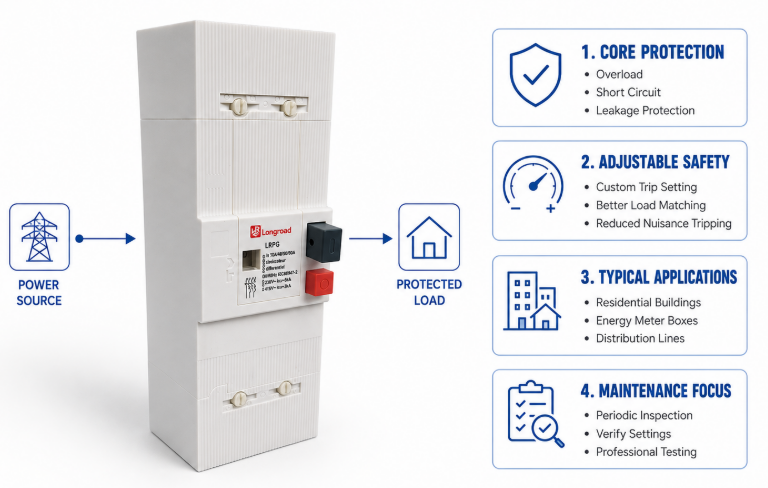
Understanding the Importance of Circuit Protection
Circuit protection is a fundamental safety requirement in any electrical system designed to prevent catastrophic failures such as electrical fires, damage to sensitive electronics, and risks of electric shock to individuals.
At its core, the philosophy of electrical safety relies on the ability to detect anomalies within a circuit before they escalate into dangerous situations. Without proper circuit protection, any minor fault, such as a loose connection, a power surge, or an accidental short circuit, could lead to overheating and potential combustion. Modern electrical infrastructure requires sophisticated devices that can react instantly to these threats. The risk profile of modern circuits has increased significantly due to the sheer number of devices connected to them and the higher energy density required by high-performance electronics.
The evolution of these systems has moved from simple, one-time fuses to highly intelligent, reusable circuit breakers. These devices serve as the gatekeepers of electrical distribution. By continuously monitoring the current flow, they ensure that the load remains within safe operating limits. This preventative measure is essential, especially in environments where high-power appliances or heavy industrial machinery are constantly in operation. Furthermore, the reliance on digital systems and automated processes makes the stability of power supply a critical factor in business operational efficiency, making proactive circuit protection a strategic asset.
Additionally, in modern commercial and residential buildings, the integration of adjustable current protection has become standard. This allows for a more granular approach to safety, where circuits can be specifically calibrated to the exact needs of the devices they serve, rather than relying on generic protection levels that may be either too sensitive or completely inadequate. By providing a customizable safety threshold, property owners gain better control over their energy infrastructure, significantly reducing the likelihood of unexpected power outages and protecting connected devices from erratic power quality.
How an Adjustable Current Circuit Breaker Enhances Safety
An Adjustable Current Circuit Breaker enhances safety by allowing the user to precisely set trip thresholds to match the specific load requirements of the electrical circuit, ensuring optimal protection without unnecessary tripping.
Traditional circuit breakers often rely on fixed thresholds, which can be problematic in dynamic environments. An Adjustable Current Circuit Breaker offers a paradigm shift by providing engineers and technicians with the capability to customize the protection range. This precision is vital for minimizing downtime while maximizing the security of the distribution line. By adjusting the current limits, the device acts as a tailored shield for equipment that may have specific startup current profiles or sensitive operational limits. This adaptability is particularly crucial in environments where load conditions fluctuate throughout the day, such as smart homes or commercial facilities with varied peak operational hours.
This enhanced safety mechanism is particularly beneficial in preventing 'nuisance tripping'—a common issue where breakers cut power under normal load spikes, causing disruption to operations. Because the trip points are adjustable, the device can effectively differentiate between a hazardous overcurrent event and a safe, temporary surge. This intelligence adds a layer of reliability that is critical for mission-critical facilities, such as data centers or hospitals. By reducing the frequency of false alarms and unnecessary interruptions, the system increases the overall uptime of the facility, allowing for a more stable and productive work environment.
Moreover, the versatility of these devices simplifies the upgrade process. As businesses grow and expand their electrical infrastructure, they often add new equipment. Instead of needing to replace the entire circuit breaker panel, technicians can simply adjust the settings on the current breaker to accommodate the new load parameters. This scalability not only saves costs but also ensures that the protection remains current and effective over time, adapting to the evolving needs of the facility without the need for extensive downtime or structural electrical work.
Key Benefits of Using Adjustable Current Circuit Breakers
The main benefits of using an Adjustable Current Circuit Breaker include increased operational flexibility, improved system reliability, reduced maintenance costs through intelligent design, and a more robust approach to electrical fault management.
Precision Protection: Unlike fixed breakers, these devices can be tuned to the exact requirements of the load, preventing both under-protection and over-protection scenarios, ensuring each circuit gets precisely the level of safety it needs.
Operational Flexibility: They are ideal for applications where the electrical load might change over time, allowing for seamless adaptation without hardware replacement, which saves significant time and labor.
Enhanced System Uptime: By effectively managing load spikes and minimizing nuisance tripping, these breakers keep power running where it is needed most, supporting continuous operation in critical environments.
Economic Efficiency: Because they can adapt to new loads, there is less need to completely overhaul distribution boards during building renovations or upgrades, leading to substantial long-term cost savings.
The precision offered by these units is a key driver for their adoption across various sectors. For residential energy management, the ability to calibrate the breaker means that homes with diverse electrical needs—from electric vehicle chargers to high-demand kitchen appliances—can be managed safely from a single point of entry. This level of customization is simply not possible with conventional, non-adjustable alternatives, which often require over-provisioning or frequent manual interventions.
Furthermore, the design of these breakers often incorporates advanced monitoring capabilities. This means that facility managers gain better visibility into the performance of their electrical network. By monitoring, for example, the performance of energy metering solutions, teams can identify patterns in energy usage and potential fault trends before they cause a critical failure. This transition from reactive to proactive maintenance is a significant step forward in industrial and residential electrical safety, ensuring that problems are resolved before they escalate into major outages or equipment damage.
Finally, consider the environmental benefit of these systems. Efficiently managed electrical circuits contribute to reduced energy wastage and prevent the premature aging of electrical equipment. By keeping circuits running within their optimal range, these breakers help extend the lifespan of all connected electrical hardware, which is a major component of sustainable facility management and long-term cost reduction strategies for both large commercial properties and private homes.
Applications of Modern Circuit Protection Devices
Modern circuit protection devices, including adjustable current circuit breakers, are widely applied in residential, commercial, and industrial sectors to provide comprehensive protection against overloads, short circuits, and leakage.
In the residential sector, these devices are essential for ensuring the safety of modern households that feature complex electrical demands. As homeowners add more appliances and integrate renewable energy sources like solar panels, the demand on the main service connection increases. Adjustable circuit breakers allow for a flexible setup that can safely handle these evolving demands while ensuring that the utility service connection remains secure and compliant with local regulations. This ensures that even as a home evolves into a smart energy-managed household, the safety infrastructure can scale alongside it.
Commercial applications are equally critical. In office buildings, retail spaces, and hotels, maintaining power reliability is essential for business continuity. Circuit breakers are deployed in distribution panels to manage power for lighting, HVAC systems, and IT infrastructure. The use of adjustable current settings allows building managers to partition these loads effectively, ensuring that a fault in one section of the building does not result in a total power blackout. This granularity allows for targeted maintenance and improved power quality management across large, complex commercial sites.
Industrial applications take this requirement a step further. Factories and manufacturing facilities rely on constant power for production lines, robotic systems, and process control. Here, the safety function of the circuit breaker is not just about preventing fire; it is about protecting expensive machinery from damage that can result from electrical instability. By using robust, adjustable breakers, industrial facilities can fine-tune their protection levels to provide the high level of security that complex industrial hardware demands, preventing costly repairs and ensuring that production schedules remain on track.
In summary, the application of these devices spans across:
Residential Complexes: Managing diverse household loads and integrating renewable systems.
Commercial Facilities: Ensuring business continuity for hotels, retail, and office environments.
Industrial Settings: Protecting precision machinery and complex production lines from electrical anomalies.
Maintaining Your Circuit Protection Infrastructure
Maintaining your circuit protection infrastructure requires a proactive approach involving periodic inspections, operational testing, and ensuring that settings remain appropriate for the current electrical loads.
Regular maintenance is the most effective way to ensure that your safety devices perform as intended when the need arises. Over time, environmental factors such as humidity, dust, and temperature variations can affect the mechanical and electronic components within a circuit breaker. Therefore, implementing a routine inspection schedule is critical. This should include checking for loose connections, signs of discoloration due to heat, and verifying that the breaker mechanism operates freely. A robust maintenance program can identify potential failure points months before they actually manifest, preventing catastrophic outages.
For adjustable circuit breakers, the maintenance plan must also include the verification of settings. If the electrical load has changed since the last adjustment, it is essential to re-evaluate the trip thresholds to ensure they are still appropriate. It is also wise to document these settings clearly, providing a roadmap for future maintenance or troubleshooting efforts. This documentation serves as a vital record for compliance and safety audits, providing inspectors and maintenance teams with an accurate view of the safety profile of the electrical system.
Finally, do not underestimate the importance of professional expertise. While basic visual checks can be performed by facility staff, periodic comprehensive testing of circuit breakers should be carried out by qualified electricians or professional engineers. They can perform specialized tests that measure the actual trip time and current capacity, ensuring that the protection provided is still within manufacturer specifications and safe operating limits. Investing in professional oversight is not just an operational necessity; it is a critical component of a comprehensive fire prevention and building safety strategy that protects both assets and human lives.
By prioritizing maintenance, you ensure that your investment in advanced electrical safety technology continues to pay dividends in security and reliability for years to come. Do not leave your electrical safety to chance; implement a rigorous, documented maintenance schedule today to protect your property and operations.