| Availability: | |
|---|---|
| Quantity: | |
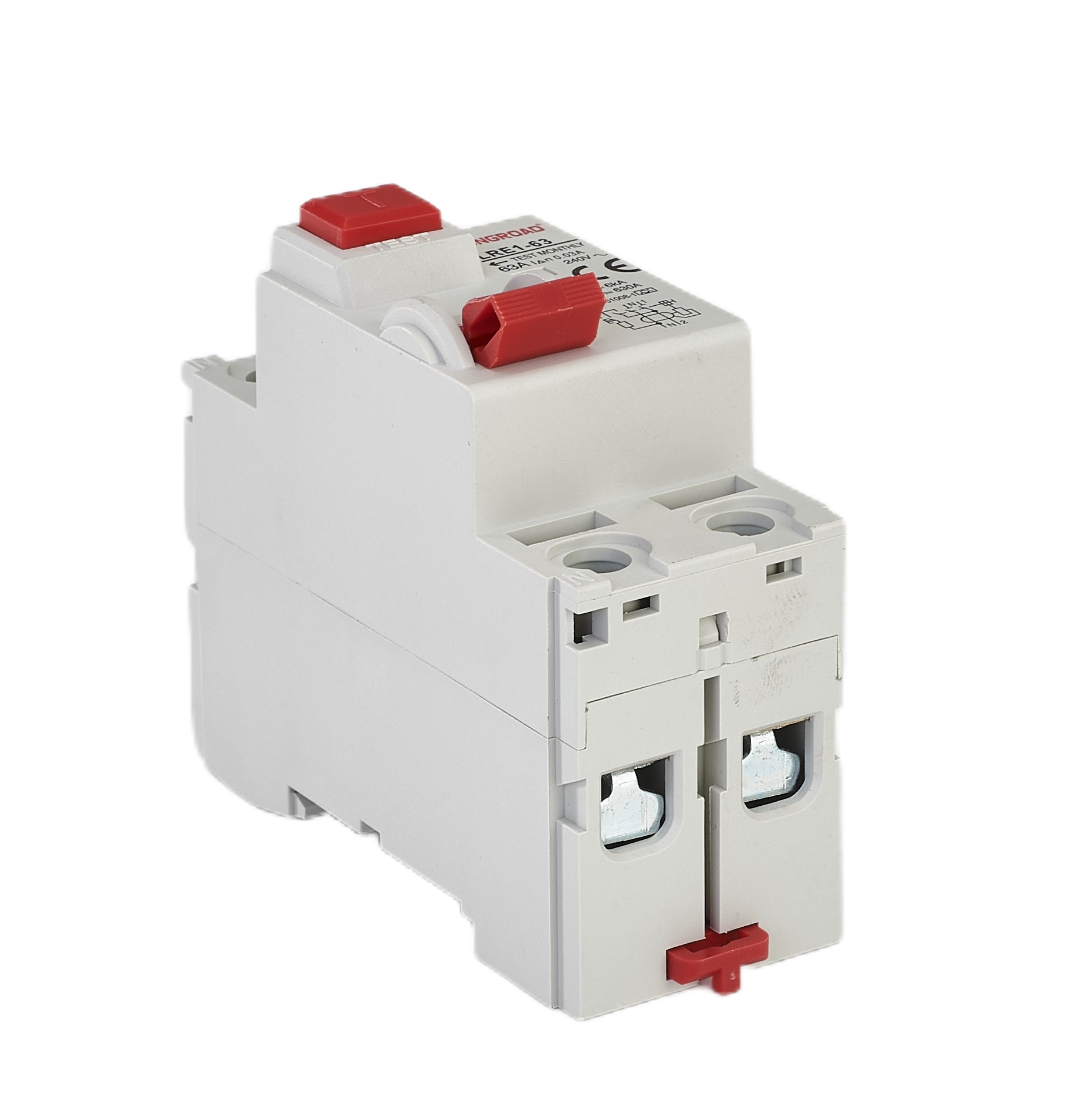
Specifications
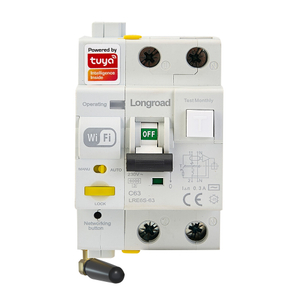
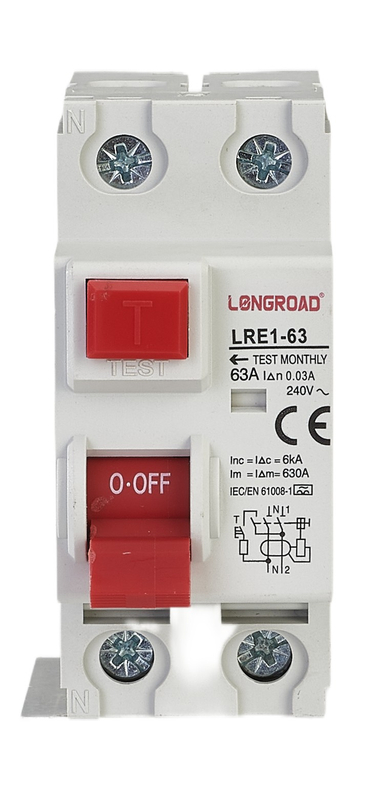
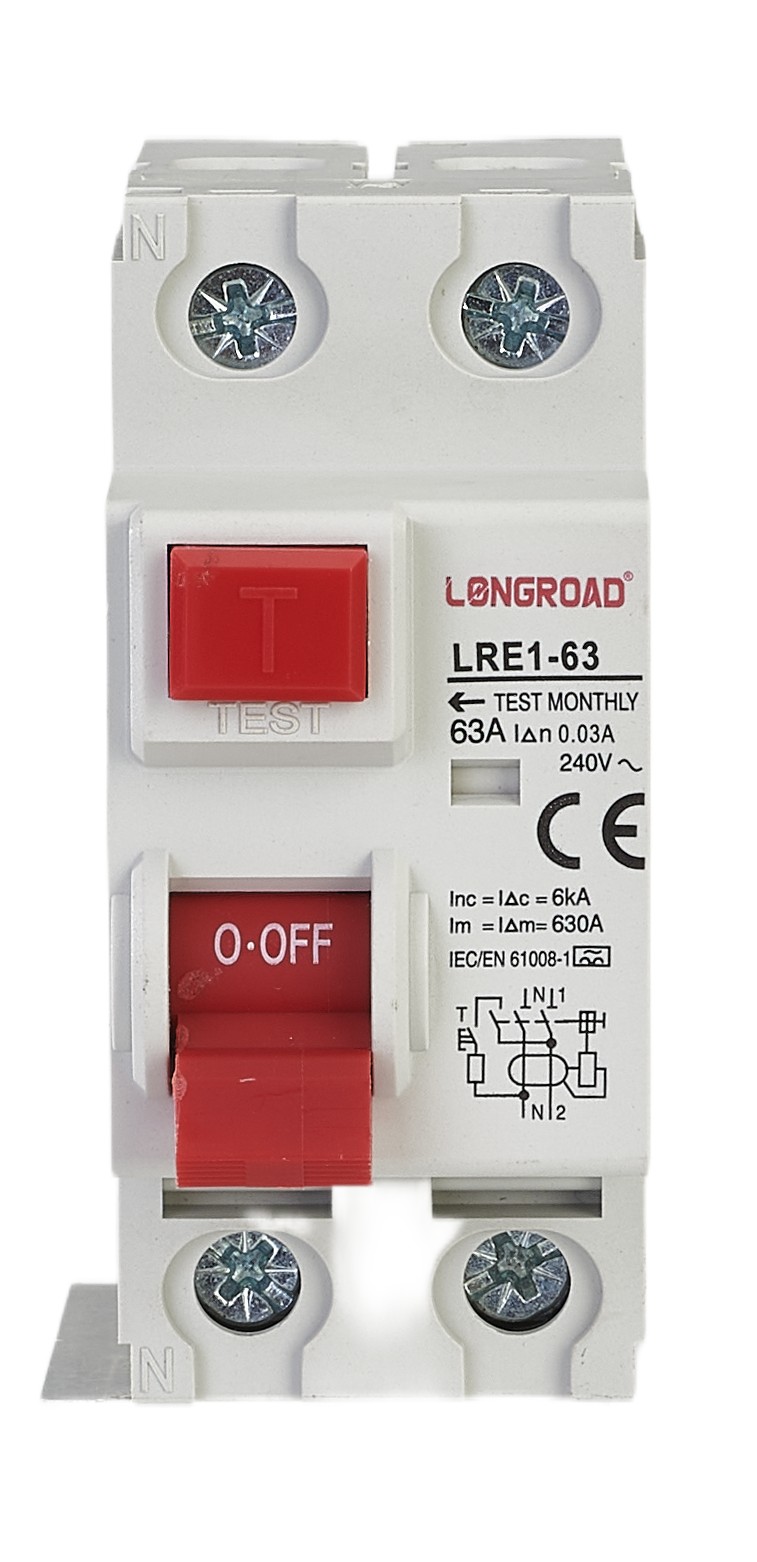
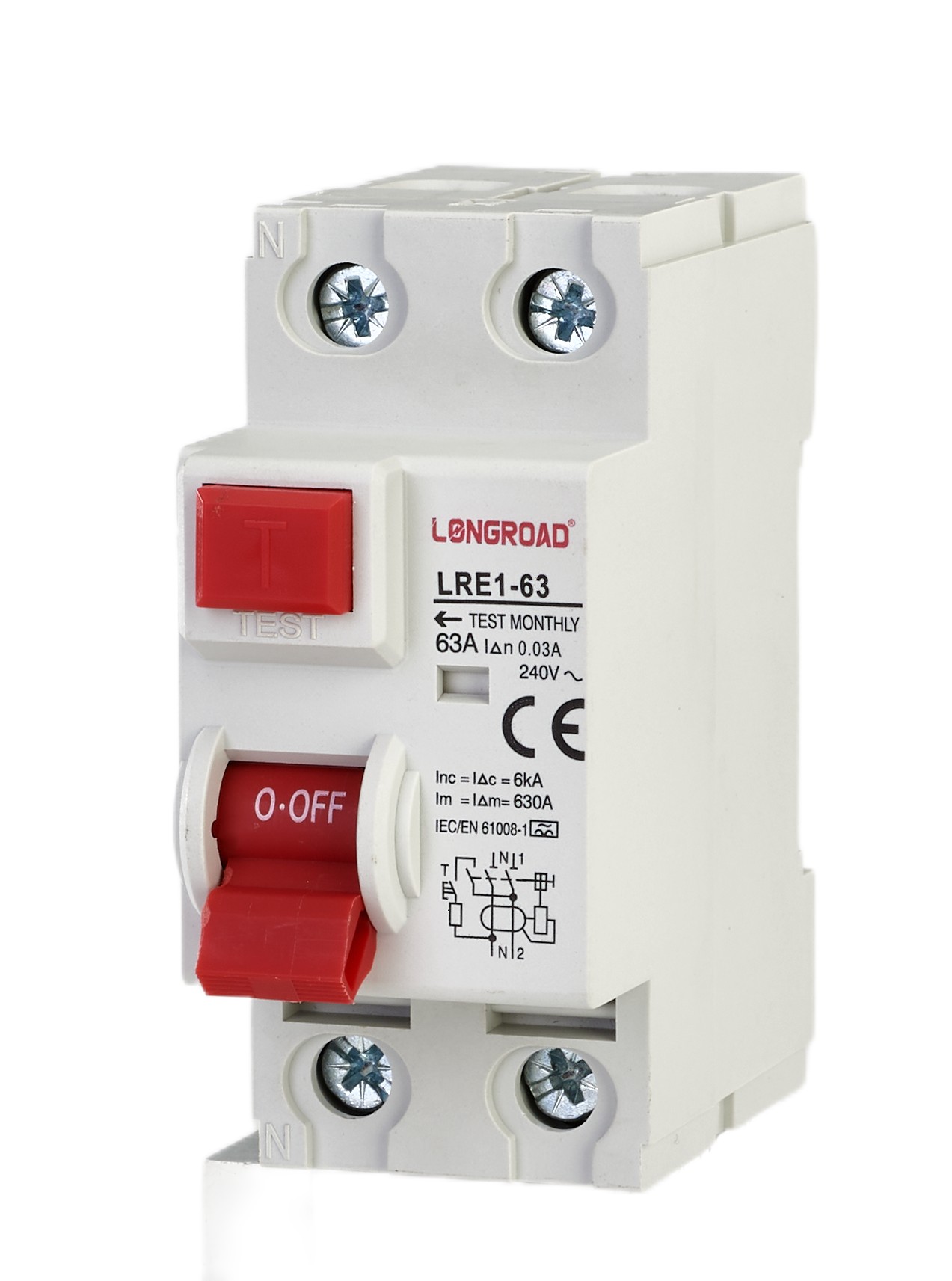
Standard | IEC/EN 61008-1 | |
Electrical features | Type (wave form of the earth leakage sensed) | AC, A |
Rated current In (A) | 16, 25, 32, 40, 63 | |
Poles | 1P+N, 3P+N | |
Rated voltage Ue (V) / Rated frequency (Hz) | 240V ~ 2P(1P+N), 415V ~ 4P(3P+N) / 50/60 | |
Rated sensitivity IΔn (A) | 0.01, 0.03, 0.1, 0.3 | |
Insulation voltage Ui (V) | 500 | |
Rated residual making and breaking capacity IΔm (A) | 500 (In=16A/25A/32A/40A) / 630 (In=63A) | |
Short-circuit current Inc = IΔc (A) | 6000/10000A | |
Rated impulse withstand voltage (1.2/50) Uimp (V) | 6000 | |
break time under IΔn (s) | ≤0.1 | |
Dielectric test voltage at ind. Freq. for 1 min (kV) | 2 | |
Pollution degree | 2 | |
Mechanical features | Electrical life | 2,000 |
Mechanical life | 2,000 | |
Fault current indicator | Yes | |
Protection degree | IP20 | |
Ambient temperature (with daily average ≤35°C) (°C) | -5... +40 | |
Storage temperature (°C) | -25... +70 | |
Installation | Terminal connection type | Cable/U-type busbar/Pin-type Busbar |
Terminal size top/bottom for cable (mm² / AWG) | 25 / 18-3 | |
Terminal size top/bottom for busbar (AWG / mm²) | 18-8 / 10 | |
Tightening torque Mount (N·m) | 2.5 | |
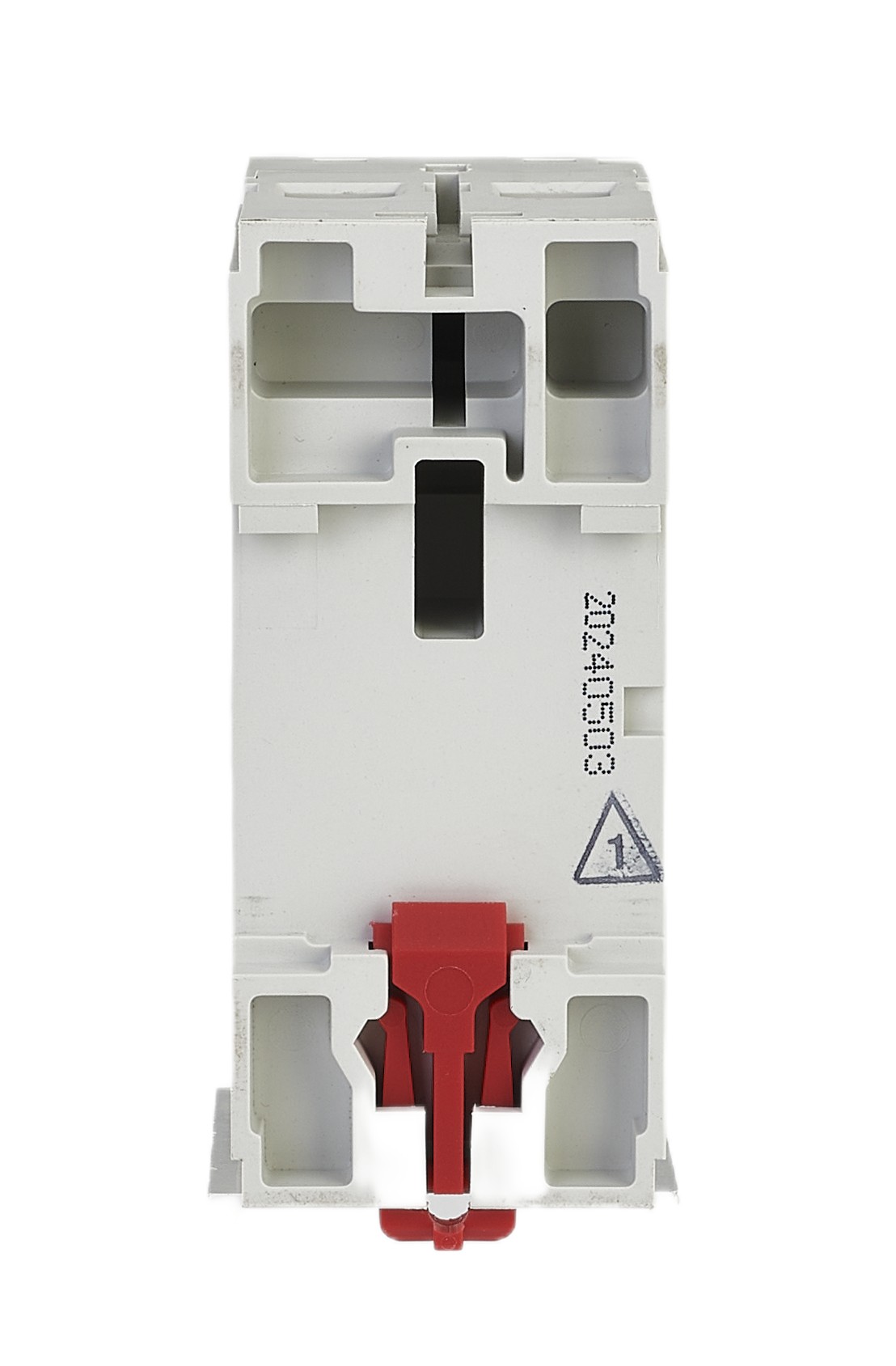
Mounting | On DIN rail EN 60715 (35mm) by means of fast clip device | |
Connection | From top and bottom |
Features
1. Voltage-independent & passive operation
No auxiliary power supply or electronic components required. It is driven purely by leakage current, and still provides effective protection under undervoltage, power failure or neutral line disconnection.
2.Ultra-high operational reliability
Adopts all-mechanical electromagnetic structure, free from electronic aging, circuit failure and electromagnetic interference. Low failure rate and long service life.
3.Stable trip performance
Accurate residual current detection, fast tripping response, effectively preventing electric shock, personal injury and electrical fire hazards.
4.Strong environmental adaptability
Wide temperature resistance, good moisture and corrosion resistance, suitable for harsh working conditions such as construction sites, outdoor and industrial occasions.
5.Anti-misoperation & high safety
Not affected by grid voltage fluctuation, phase loss and line interference, with no refusal to trip or malfunction risks.
6. Durable mechanical performance
Long mechanical service life, high switching endurance, suitable for long-term continuous operation of key circuits.
1. Construction sites and temporary power distribution facilities
2. Outdoor electrical equipment and wet environment occasions
3. Medical places such as hospitals, operating rooms and wards
4. Fire protection, emergency lighting and important safety circuits
5. Photovoltaic, wind power and new energy power generation systems
6. Industrial workshops, chemical and corrosive working conditions
7. Public buildings, commercial facilities and public entertainment places
8. Places with unstable grid voltage or frequent voltage fluctuation
9. Old residential renovation and old line power distribution system
10. Marine, underground and humid special engineering projects
1. Selection and Matching: According to the actual working conditions and protection requirements, select the appropriate pole number (2P for single-phase circuits) and rated residual operating current (IΔn). For personal protection, 30mA is preferred; for equipment and fire protection, 100mA to 300mA is recommended.
2. Correct Installation: Connect the electromagnetic RCCB in series in the main circuit. Ensure that all phase wires (L) and the neutral wire (N) pass through the residual current transformer, and the connection direction must not be reversed. Incorrect connection of phase wires and neutral wires will lead to the failure of the leakage protection function.
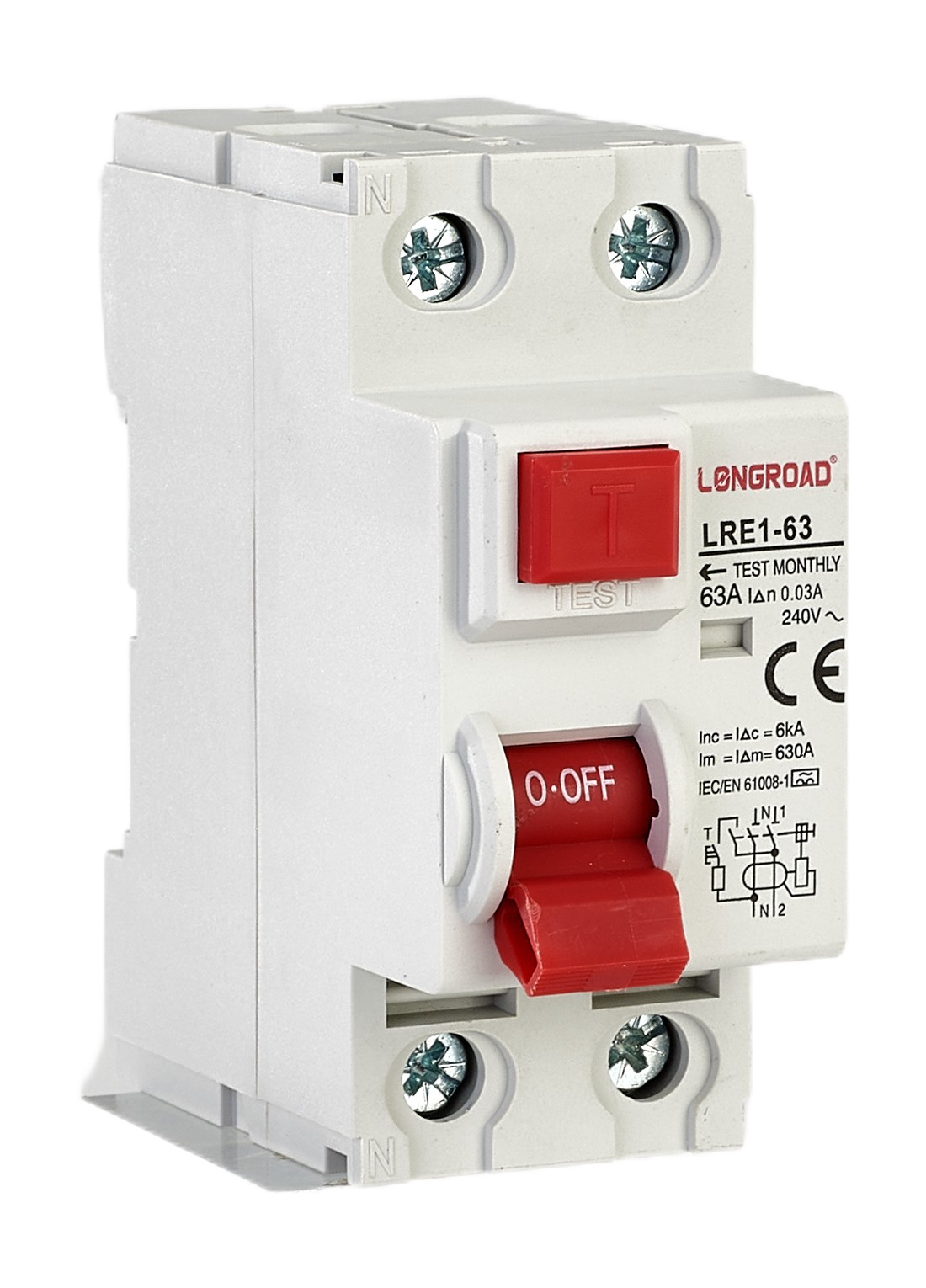
3. Function Test: Press the "TEST" button regularly (it is recommended once a month) to simulate leakage faults and verify whether the RCCB can trip quickly and reliably. If the RCCB does not trip when the test button is pressed, it indicates a fault in the device, and it should be stopped using immediately for inspection and maintenance.
4. Daily Maintenance: Keep the surface of the RCCB clean and dry to avoid erosion by dust, moisture and corrosive substances. Regularly check the wiring terminals to ensure they are firm and free from looseness. Do not disassemble the device without authorization to prevent damage to internal components.
5. Fault Handling: If the RCCB trips frequently, first check for leakage points in the circuit (such as insulation damage of electrical equipment, poor wire contact, etc.). Reset the RCCB only after the fault is eliminated. Do not force reset without troubleshooting to avoid electrical safety hazards.
6. Usage Taboos: Do not use the electromagnetic RCCB beyond its rated parameters (such as rated current, rated voltage). It is forbidden to bypass or short-circuit the RCCB during use, which will invalidate the leakage protection function and cause serious safety accidents.
F1: The electromagnetic RCCB trips frequently without obvious leakage faults.
Q1: Check whether the rated residual operating current (IΔn) is too small to match the actual circuit load; replace it with a model with appropriate IΔn. At the same time, check for hidden leakage points such as aging or damage of electrical equipment insulation, and repair or replace the faulty equipment in time.
F2: The RCCB does not trip when the "TEST" button is pressed.
Q2: Stop using the device immediately. Check whether the wiring is correct (especially whether the phase wire and neutral wire pass through the transformer correctly) and whether the wiring terminals are loose. If the wiring is normal, it indicates internal component failure of the RCCB, and the device should be replaced or sent for professional maintenance.
F3: The RCCB cannot be reset after tripping.
Q3: First, thoroughly check the circuit to eliminate all leakage faults and overload problems. If it still cannot be reset, check whether the mechanical tripping mechanism of the RCCB is stuck; if necessary, disassemble and inspect it by professional personnel, or replace the device directly.
F4: The RCCB malfunctions (trips randomly) in harsh environments (such as high humidity, high temperature, or corrosive occasions).
Q4: Check whether the RCCB is suitable for the current working environment; replace it with a model with strong environmental adaptability (such as waterproof, dustproof, and corrosion-resistant). At the same time, strengthen daily maintenance to keep the device surface clean and dry.
F5: The leakage protection function fails, and no tripping occurs when leakage occurs.
Q5: Check whether the phase wire and neutral wire are connected reversely or not all pass through the residual current transformer; correct the wiring immediately. If the wiring is correct, check whether the internal components of the RCCB are damaged, and replace the device if necessary.